Daily Intermittent Fasting and Cancer: How Time-Restricted Eating Can Influence Cancer Cell Growth and Reduce Risk
Emerging research shows that intermittent fasting may reshape metabolic pathways, lower growth signals, and create conditions that make cancer cells more vulnerable. Here’s what the science says.
Researched and written by Keith Bishop, Integrative Cancer Educator, Clinical Nutritionist, Cancer Coach, Retired Pharmacist, and Founder of the Prevail Protocol™ and Prevail Over Cancer.
Daily Intermittent Fasting and Cancer: What Science Really Shows
Intermittent fasting (IF) has moved from a weight‑loss trend to a serious area of oncology research. Scientists are now exploring how fasting windows—often 14 to 18 hours—may influence cancer risk, cancer cell metabolism, and even treatment response. While IF is not an official cancer treatment, emerging evidence suggests it may help create a metabolic environment that is less favorable for cancer development and progression.
Below, we break down what the research shows about daily intermittent fasting, its potential impact on cancer biology, and why integrative oncology practitioners often recommend it.
How Intermittent Fasting Affects Cancer Cell Metabolism
Cancer cells behave very differently from healthy cells. They rely heavily on glucose, thrive in high‑insulin environments, and often struggle to adapt to metabolic stress. Intermittent fasting appears to target several of these vulnerabilities.
- Lowering Glucose and Insulin Levels
Multiple studies show that fasting reduces circulating glucose and insulin levels—two key drivers of cancer cell growth.
- A 2022 review found that intermittent fasting improves glucose regulation and reduces insulin and IGF-1 (Insulin Growth Factor-1) signaling, both of which are associated with tumor growth and proliferation.[i]
- A 2025 systematic review found consistent reductions in insulin and IGF-1 among fasting cancer patients, even when other clinical outcomes were unchanged.[ii]
Because many cancer cells depend on glucose and insulin-like growth signals to fuel rapid division, lowering these pathways may reduce their growth advantage.
- Reducing IGF-1, a Major Cancer Growth Signal
Insulin-like growth factor 1 (IGF-1) is one of the strongest hormonal promoters of cancer cell proliferation.
- A 2025 narrative review reported that intermittent fasting reliably suppresses IGF-1, which may reduce cancer risk and slow tumor progression.[iii]
Lower IGF-1 is associated with reduced risk of breast, prostate, colorectal, and other cancers.
- Inducing Autophagy and Cellular Cleanup
Autophagy is the body’s built-in recycling system. During fasting, cells break down damaged proteins, dysfunctional mitochondria, and precancerous components.
- A 2025 review in International Journal of Molecular Sciences found that intermittent fasting activates autophagy pathways that may suppress tumor initiation and enhance cancer therapy effectiveness.[iv]
Autophagy helps maintain cellular integrity and may reduce the accumulation of mutations that lead to cancer.
- Increasing Metabolic Stress on Cancer Cells
Healthy cells adapt easily to fasting by switching to ketones. Cancer cells often cannot.
- A 2021 review in Cancer Biology & Medicine reported that intermittent fasting alters tumor cell energy metabolism, making cancer cells more vulnerable to stress and less able to proliferate.[v]
This metabolic inflexibility is one of the most promising therapeutic angles for fasting research.

Check out the FREE 20-minute Empowered Cancer Workshop. There's one starting in a few minutes.
Intermittent Fasting and Cancer Risk Reduction
Beyond its effects on cancer cell biology, intermittent fasting may influence several systemic factors linked to cancer risk.
- Reducing Chronic Inflammation
Chronic inflammation is a known driver of cancer initiation and progression.
- A 2022 review found that intermittent fasting reduces inflammatory markers and improves stress resilience, both of which may contribute to lower cancer risk.[vi]
- Improving Metabolic Health
Obesity, insulin resistance, and metabolic syndrome significantly increase cancer risk.
- A 2025 narrative review concluded that intermittent fasting may reduce cancer risk by improving metabolic health, lowering insulin resistance, and reducing obesity‑related inflammation.
- Supporting Mitochondrial Health
Mitochondrial dysfunction contributes to oxidative stress and DNA damage.
- Intermittent fasting has been shown to induce mitophagy—targeted cleanup of damaged mitochondria—which may reduce oxidative stress and lower cancer risk.
Intermittent Fasting During Cancer Treatment: What We Know
While research is still in its early stages, several studies have explored fasting during chemotherapy.
- Potential to Reduce Side Effects
Trials suggest fasting may reduce chemotherapy-related fatigue, nausea, depression, upset stomach, sleeplessness, and inflammation while improving social interactions.
- Potential to Protect Healthy Cells
Healthy cells enter a protective, low-growth state during fasting, while cancer cells remain vulnerable.
- This “differential stress resistance” has been observed in multiple preclinical studies and summarized in the 2022 review by Peña Crespo et al..
- Mixed Evidence on Treatment Outcomes
A 2025 systematic review found that intermittent fasting is safe and feasible during chemotherapy but did not yet show consistent improvements in treatment outcomes.[vii]
More clinical trials are needed before fasting can be recommended during active treatment.
What Types of Cancer Might Be Sensitive to Intermittent Fasting?
Based on current research, fasting appears to influence pathways involved in:[viii] [ix] [x]
- Breast cancer: ↓ Insulin, ↓ IGF‑1, ↑ chemo sensitivity
- Colorectal cancer: ↓ Glucose metabolism, ↑ autophagy
- Lung cancer: ↑ oxidative stress, ↓ glycolysis
- Melanoma: ↑ autophagy, ↑ treatment sensitivity
- Pancreatic cancer: ↓ insulin signaling, ↓ glycolysis
- Prostate cancer: ↓ IGF‑1, ↓ androgen signaling
- Glioblastoma: ↓ glucose availability, ↑ ketone reliance
- Ovarian cancer: ↑ chemo sensitivity, metabolic stress
- Leukemia: ↓ proliferation, ↑ oxidative stress
These findings come mostly from early human studies and preclinical research, but the patterns are consistent across multiple reviews.
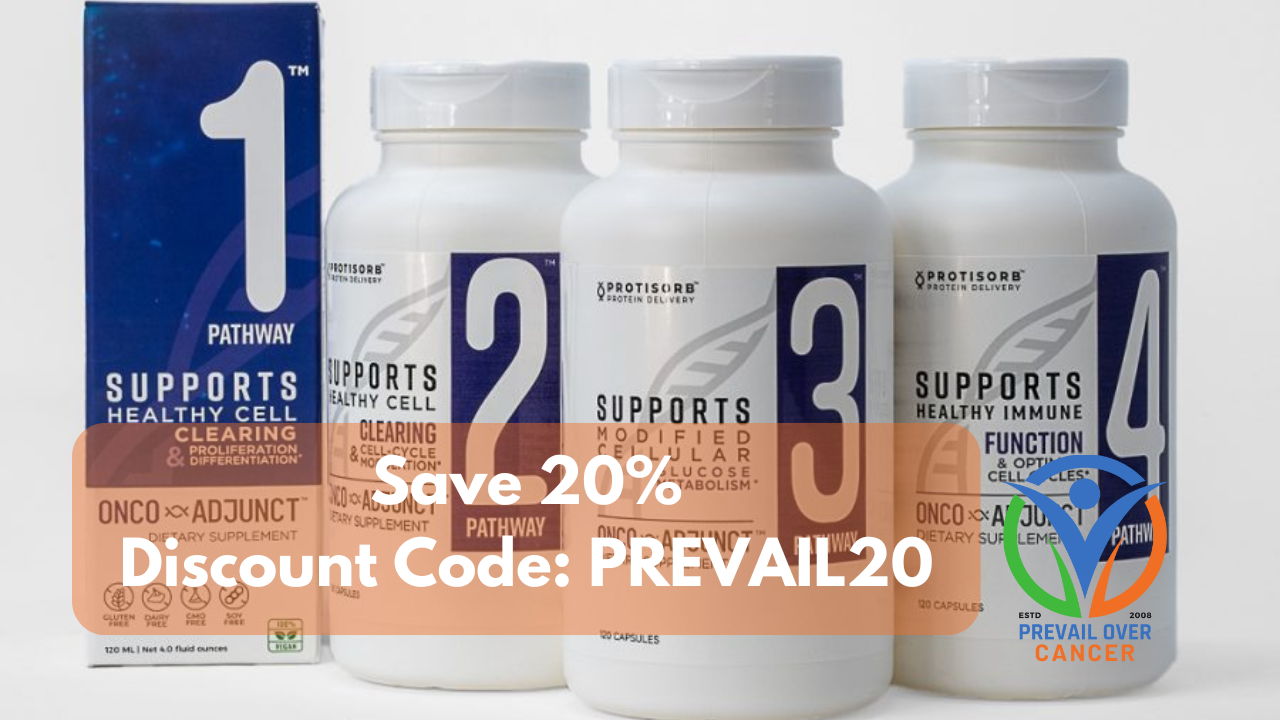
Onco-Adjunct Pathway Supplements are a core part of my Prevail Protocol.
Is Intermittent Fasting Safe During Cancer Treatment?
Research so far shows:
- It may help reduce some chemotherapy side effects
- It may help protect healthy cells
- It appears safe and feasible for many patients
However, fasting during treatment should only be done with medical supervision.
A Simple Way to Get Started with Intermittent Fasting for Cancer
If you’re curious about trying intermittent fasting, here’s a gentle approach:
- Start with 12 hours overnight (example: 7 PM to 7 AM)
- Gradually increase to 14-16-18 hours, if it feels comfortable
- Focus on whole, nutrient‑dense foods during your eating window
- Stay hydrated with water, herbal tea, or black coffee during fasting
Small steps can make a big difference.
Some people should not fast, including those who are underweight, losing weight unintentionally, pregnant, breastfeeding, or taking certain medications.
How Daily Intermittent Fasting Works
Most cancer-focused research examines:
- Time-restricted eating (14–18 hours fasting daily)
- Alternate-day fasting
- Short-term fasting (24–48 hours) around chemotherapy
For general cancer risk reduction, daily time-restricted eating is the most studied and practical approach.
A typical schedule might include:
- 16:8 fasting (fast 16 hours, eat within an 8-hour window)
- 14:10 fasting (fast 14 hours, eat within a 10-hour window) - a gentler, highly sustainable version)
These windows help stabilize glucose, reduce insulin spikes, and promote metabolic flexibility.
Who Should NOT Fast Without Medical Guidance
Intermittent fasting is not appropriate for everyone. Medical supervision is essential for:
- People with diabetes on glucose-lowering medications
- Individuals with unintentional weight loss
- Patients undergoing active cancer treatment
- Those with a history of eating disorders
- Pregnant or breastfeeding individuals
Using a Bioimpedance Scale to Track Your Intermittent Fasting and Cancer Progress
Another simple tool that can support your fasting and nutrition routine is a bioimpedance body‑composition scale. Using it just once a week can give you helpful insights into changes in muscle mass, body fat, bone mass, and water balance. These numbers aren’t perfect, but they help spot trends over time. If muscle begins to drop, it may be a sign to increase protein intake or add gentle strength‑building activities. If water levels fluctuate, it can highlight hydration needs. And if body fat decreases while muscle stays stable, it’s a good indication that your food and activity program is supporting healthier metabolism. Weekly tracking helps you make minor, informed adjustments without obsessing over daily fluctuations.
My clients use the FitIndex Weight Scale once weekly to monitor and adjust their Prevail Protocol.
Intermittent Fasting for Cancer Conclusion: A Promising, Evidence-Informed Strategy
Daily intermittent fasting is not a cure for cancer—but the research is compelling. By lowering insulin and IGF-1, improving metabolic health, activating autophagy, and stressing cancer cells metabolically, fasting may help reduce cancer risk and create conditions that make cancer cells less likely to thrive.
As more clinical trials emerge, intermittent fasting may become a powerful lifestyle tool in cancer prevention and supportive care.
Get your Timed Eating for Cancer Guide in our Learning Center.
The Bottom Line for Intermittent Fasting and Cancer
Intermittent fasting is not a cure for cancer, but research suggests it may:
- Improve metabolic health
- Reduce inflammation
- Lower insulin and IGF‑1
- Support healthy cell repair
- Create a less favorable environment for cancer cells
For many people, it’s a simple, sustainable lifestyle shift that supports overall well‑being.

Intermittent Fasting and Cancer Reference Sources
[i] Crespo A, Massari J, Berdiel M, Olalde J, Gonzalez M. Intermittent Fasting and Cancer. Journal of Restorative Medicine. 2022;12(1). doi: https://doi.org/10.14200/jrm.2022.0003
[ii] Maes, J., Durieux, V., Liebmann, M. et al. Impact of intermittent fasting on patients with cancer undergoing chemotherapy and/or targeted therapies: a systematic review of the literature. Support Care Cancer 33, 863 (2025). https://doi.org/10.1007/s00520-025-09907-7
[iii] Faris, M. E., Alkawamleh, D. H., & Madkour, M. I. (2025). Unraveling the impact of intermittent fasting in cancer prevention, mitigation, and treatment: A narrative review. Journal of Nutritional Oncology, 10(2), 29-39. https://doi.org/10.1097/jn9.0000000000000049
[iv] Wolska, W., Gutowska, I., Wszołek, A., & Żwierełło, W. (2025). The Role of Intermittent Fasting in the Activation of Autophagy Processes in the Context of Cancer Diseases. International Journal of Molecular Sciences, 26(10), 4742. https://doi.org/10.3390/ijms26104742
[v] Zhao X, et al. The role and its mechanism of intermittent fasting in tumors: friend or foe? Cancer Biol Med. 2021. https://www.cancerbiomed.org/content/cbm/18/1/63.full.pdf
[vi] Maes J, et al. Impact of intermittent fasting on patients with cancer undergoing chemotherapy and/or targeted therapies: a systematic review. 2025. https://link.springer.com/content/pdf/10.1007/s00520-025-09907-7.pdf
[vii] Maes, J., Durieux, V., Liebmann, M. et al. Impact of intermittent fasting on patients with cancer undergoing chemotherapy and/or targeted therapies: a systematic review of the literature. Support Care Cancer 33, 863 (2025). https://doi.org/10.1007/s00520-025-09907-7
[viii] Maes, J., Durieux, V., Liebmann, M. et al. Impact of intermittent fasting on patients with cancer undergoing chemotherapy and/or targeted therapies: a systematic review of the literature. Support Care Cancer 33, 863 (2025). https://doi.org/10.1007/s00520-025-09907-7
[ix] Zhao X, et al. The role and its mechanism of intermittent fasting in tumors: friend or foe? Cancer Biol Med. 2021. https://www.cancerbiomed.org/content/cbm/18/1/63.full.pdf
[x] Wolska, W., Gutowska, I., Wszołek, A., & Żwierełło, W. (2025). The Role of Intermittent Fasting in the Activation of Autophagy Processes in the Context of Cancer Diseases. International Journal of Molecular Sciences, 26(10), 4742. https://doi.org/10.3390/ijms26104742
Author

Keith Bishop
Clinical Nutritionist, Cancer Coach, Retired Pharmacist, Author
Keith Bishop founded Prevail Over Cancer and is a passionate advocate for cancer awareness and research. With a background in pharmacy and clinical nutrition I’m dedicated to providing insightful and empowering information to help clients, survivors, and caregivers navigate their journey. From personal experiences and a commitment to holistic health, Keith aims to inspire and support the cancer community through comprehensive and accessible content.
Join over 8,000 subscribers!
Get access to Keith's Prevail Over Cancer Newsletter with news, blogs, and updates!
Recent Posts
Blog Post Topics
All Categories- microbiome modulation in oncology
25 hydroxyvitamin d cancer prevention
active hexose correlated compound
akkermansia and chemotherapy synergy
akkermansia and gastric cancer
akkermansia and radiation therapy
akkermansia muciniphila and cancer