Fenbendazole vs Mebendazole vs Ivermectin: Cancer
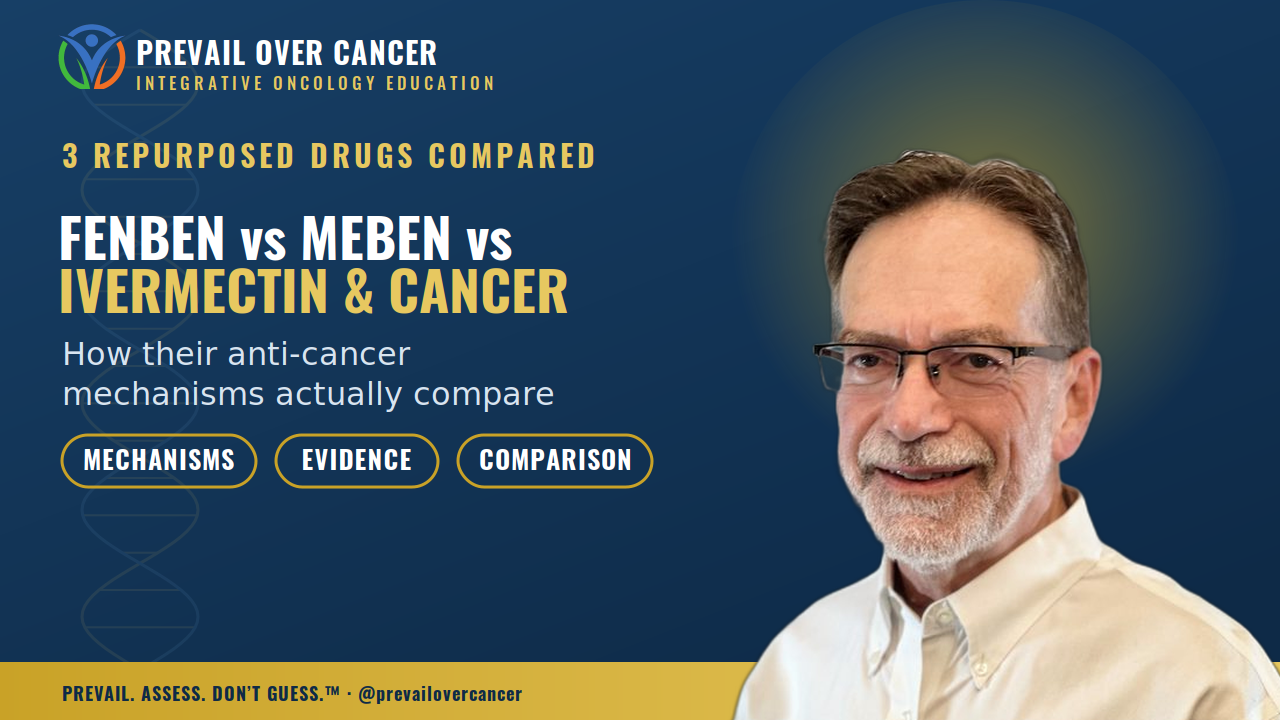
Three Antiparasitic Worm Medicines Scientists Are Studying for Cancer
Researched and Written by Keith Bishop, Clinical Nutritionist, Cancer Coach, Retired Pharmacist, Integrative Oncology Educator
You may have heard people talk about three medicines: fenbendazole, mebendazole, and ivermectin. All three were made to kill parasitic worms or bugs, not cancer. But scientists are now studying them to see if they can also fight cancer cells.
These three medicines are not the same. They work in different ways. This article explains what each one does, how they are alike, and how they are different — using easy words and short sentences.
This article will not tell you to take these drugs. It also won't tell you to avoid them. It just explains what scientists have found so far, in plain language.
What Do All Three Have in Common?
Fenbendazole and mebendazole come from the same drug family. They are both called "benzimidazoles," which is just a fancy word for a type of dewormer.
Iver
...Awakening the Guardian: Restoring p53 Against Cancer
Which cancers involve p53, how to test for it, and the food, lifestyle, supplements, and repurposed medications that support your master tumor suppressor.
Restoring p53 — Your Body's Master Tumor Suppressor — Against Cancer
By Keith Bishop — Clinical Nutritionist, Cancer Coach, Retired Pharmacist, Integrative Oncology Educator, Founder of Prevail Over Cancer
|
IMPORTANT — Please Read This article is educational and is not medical advice, diagnosis, or treatment. It does not replace your oncology team. These statements have not been evaluated by the Food and Drug Administration; nothing here is intended to diagnose, treat, cure, or prevent any disease. No dosing is provided. Integrative strategies are meant to complement — never replace — conventional cancer care. Always review any food, supplement, or medication decision with your physician and pharmacist, especially during active treatment. |
Deep inside nearly every cell in your body sits a single protein that ...
Fenbendazole, Ivermectin & p53: Anticancer Research
Fenbendazole and Ivermectin in Cancer Care: What the Research Actually Shows
A clinical nutritionist's review of mechanisms — including p53 reactivation, microtubule disruption, glycolysis inhibition, and immune synergy — for two of the most-discussed repurposed antiparasitics in integrative oncology.
Researched and written by Keith Bishop, Integrative Cancer Educator, Cancer Coach, Clinical Nutritionist, Retired Pharmacist, and Founder of Prevail Over Cancer.
You've heard the names. A friend mentioned them. A YouTube video swore by them. A Facebook group of 100,000 members says they cured stage IV cancer. And your oncologist either rolled their eyes or warned you against them.
So what is actually true about fenbendazole and ivermectin in cancer care?
After three decades as a pharmacist and now as a clinical nutritionist and cancer coach working with patients every day, I want to walk you through what the published research actually shows — the mechanisms, the preclinical data, th...
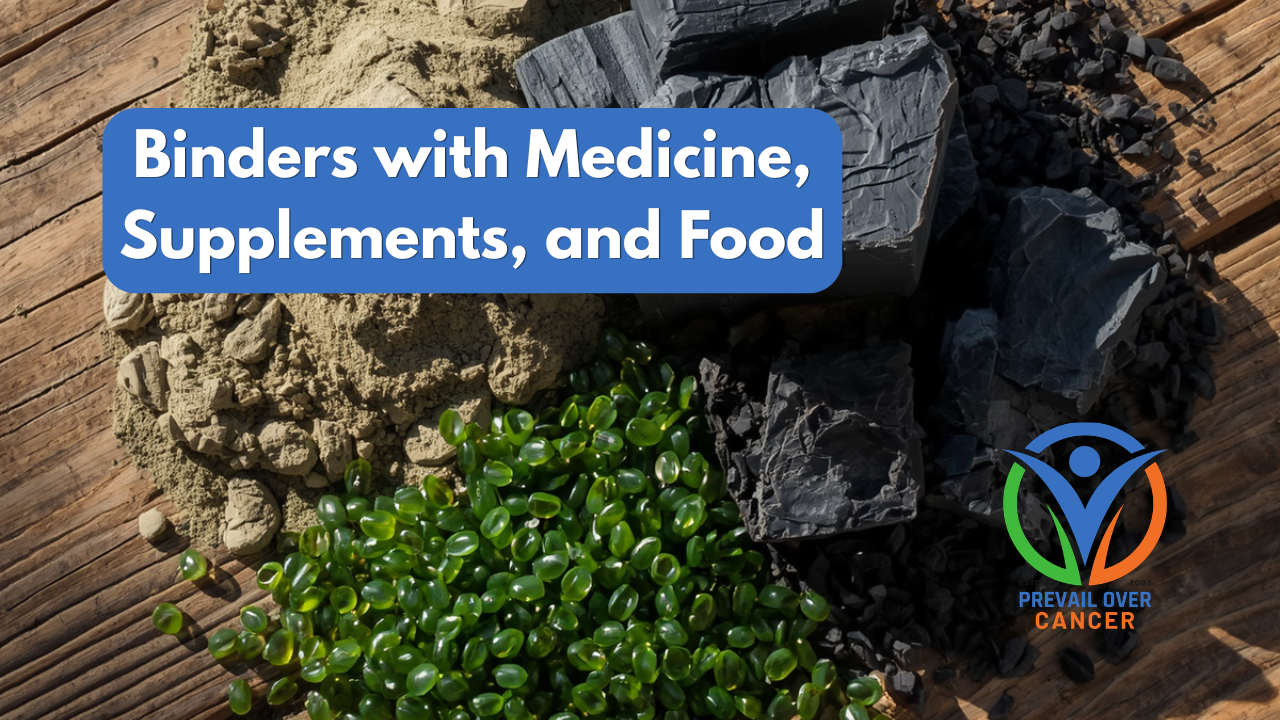
How Binders Block Your Drugs, Supplements, and Food
Researched and written by Keith Bishop, Integrative Cancer Educator, Cancer Coach, Clinical Nutritionist, Retired Pharmacist, and Founder of Prevail Over Cancer.
The Big Idea in Plain Language
Binders are sticky on the inside. They grab things. That sounds helpful when the thing is a toxin or a heavy metal. But binders are not smart. They cannot tell the difference between a toxin, your prescription drug, your fish oil, and the iron in your dinner.
If you take a binder at the wrong time, you can block the very things that are keeping you alive and helping you heal.
This blog walks you through what each binder does, what it can take from you, and how to time them safely. We will also look at the rare times binders are truly needed.
Quick Look at the Big Five Binders
| Binder | What It Is | Main Use |
|---|---|---|
| Activated Charcoal | Heated carbon with tiny pores | Acute poisoning in the ER |
| Zeolite (Clinoptilolite) | Volcanic mineral with a cage shape | Heavy metal support |
Choosing the Smartest Protein Powder for Your Anticancer Smoothie: A Cancer-Type and Treatment-Phase Guide
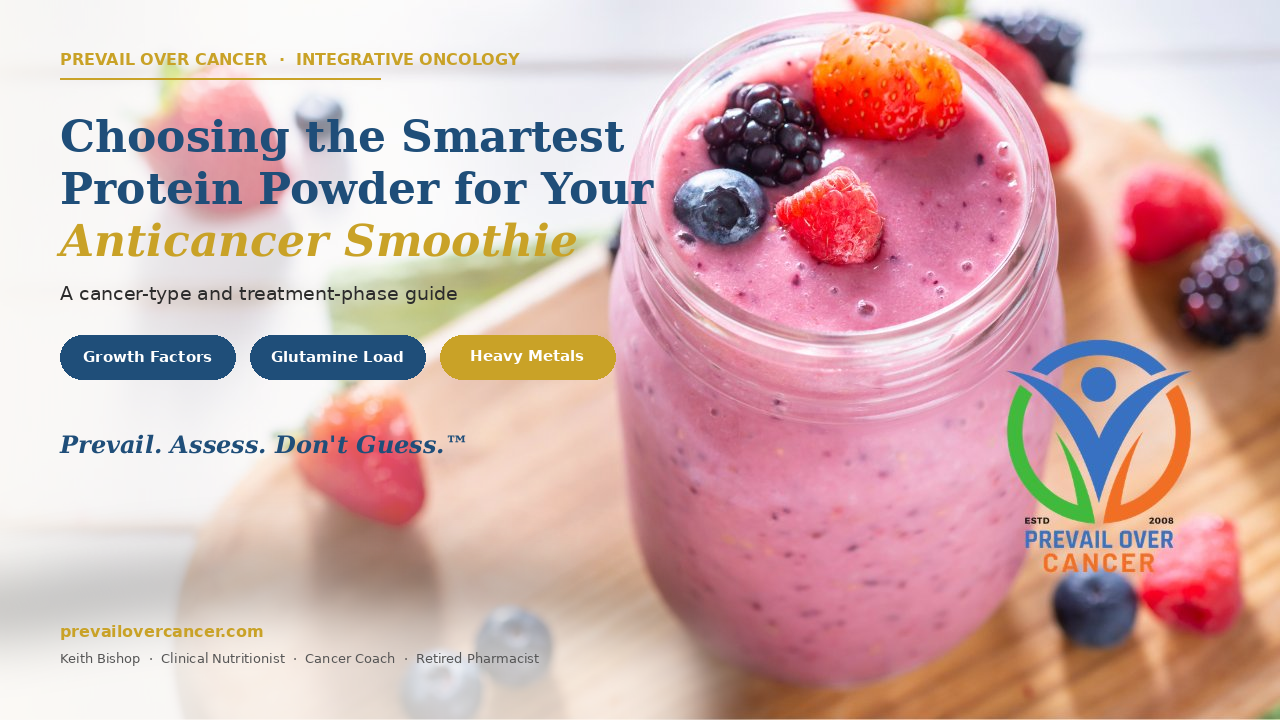
Prevail. Assess. Don't Guess.™
By Keith Bishop — Clinical Nutritionist, Cancer Coach, Retired Pharmacist, Integrative Oncology Educator, and Founder of Prevail Over Cancer LLC™ and the Prevail Protocol™
IMPORTANT — Please Read Before Using This Document
This article is for educational purposes only. It does not replace medical advice from your oncologist, physician, or licensed clinician. These statements have not been evaluated by the Food and Drug Administration. Supplements are not intended to diagnose, treat, cure, or prevent any disease.
Why the Scoop You Choose Actually Matters
A morning smoothie is one of the easiest places to load real anticancer firepower into your day — phytochemicals from berries and cruciferous sprouts, omega-3s, fiber, and protein to hold your blood sugar steady and protect your lean mass during treatment. But the protein powder you choose can either support the goals of your integrative oncology plan or quietly work against them.
Three filter...
The Cancer Trend Most Patients Never See
Why a single lactate dehydrogenase result tells you very little — and how a pattern of LDH tests across time can show you whether your cancer is advancing, retreating, or holding steady.
IMPORTANT — Please Read Before Using This Document This material is for educational purposes only and is not intended to diagnose, treat, cure, or prevent any disease. Statements regarding dietary supplements have not been evaluated by the FDA. Always consult your qualified healthcare practitioner before making changes to your protocol.
A Snapshot vs. a Movie
A single LDH result is a snapshot. It tells you where the number sits today — and very little else.
A series of LDH results is something else entirely. It's a movie. It tells you which direction the metabolic engine of your cancer is moving. It tells you whether your tumor burden is climbing, plateauing, or shrinking. It tells you whether your current treatment — conventional, integrative, or both — is actually working at the cellular ...
Citrus and Skin Cancer: The Hidden Sun Exposure Risk
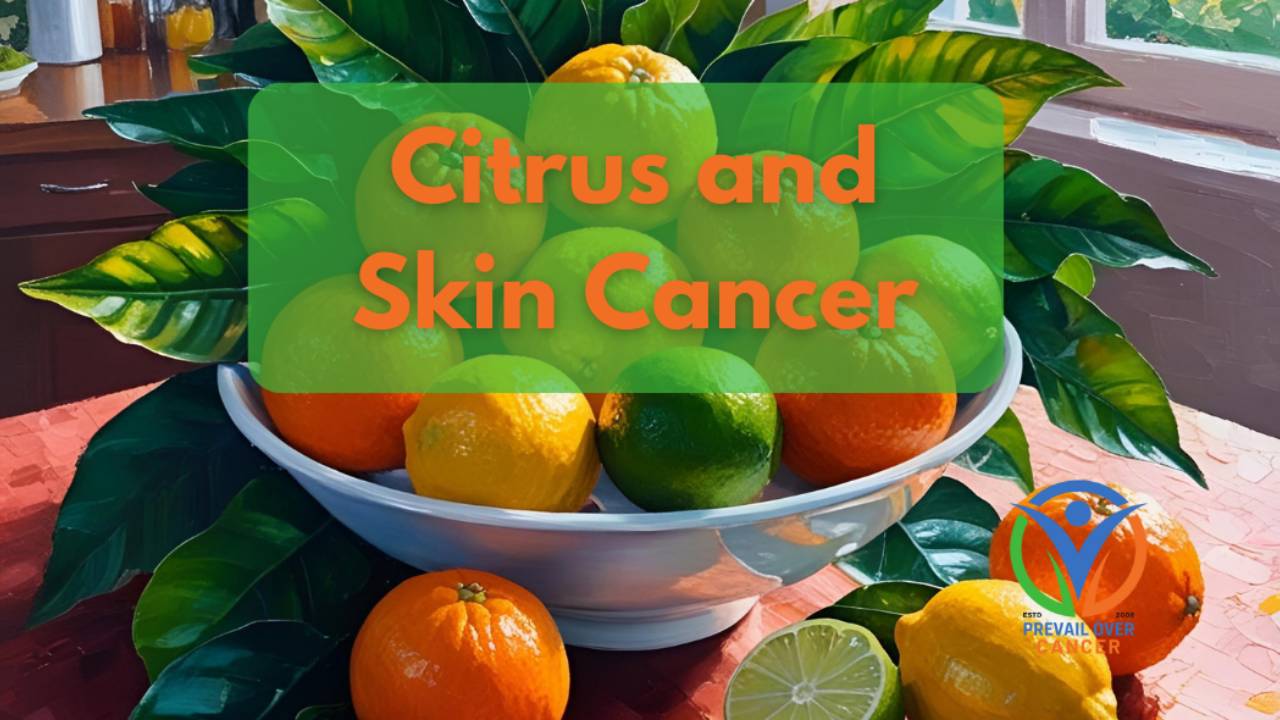
What grapefruit, limes, and lemons do to your skin — and why I follow the Six-Hour Rule before sunshine
Researched and written by Keith Bishop, Clinical Nutritionist, Cancer Coach, Retired Pharmacist,
Integrative Oncology Educator and founder of the Prevail Protocol™
IMPORTANT — Please Read Before Using This Document
The information presented here is for educational purposes only and is not intended as medical advice, diagnosis, or treatment. Always consult your healthcare provider before making changes to your diet, lifestyle, or supplement program.
*Statements regarding dietary supplements have not been evaluated by the Food and Drug Administration. Supplements are not intended to diagnose, treat, cure, or prevent any disease.
The Hidden Skin Cancer Risk of Citrus and Sun Exposure
What grapefruit, limes, and lemons do to your skin — and why I follow the Six-Hour Rule before sunshine
Citrus fruits are celebrated for their vitamin C, flavonoids, and antioxidant power. But...
The EWG Dirty Dozen & Clean 15: What Every Cancer Patient Needs to Know About Pesticides in Produce
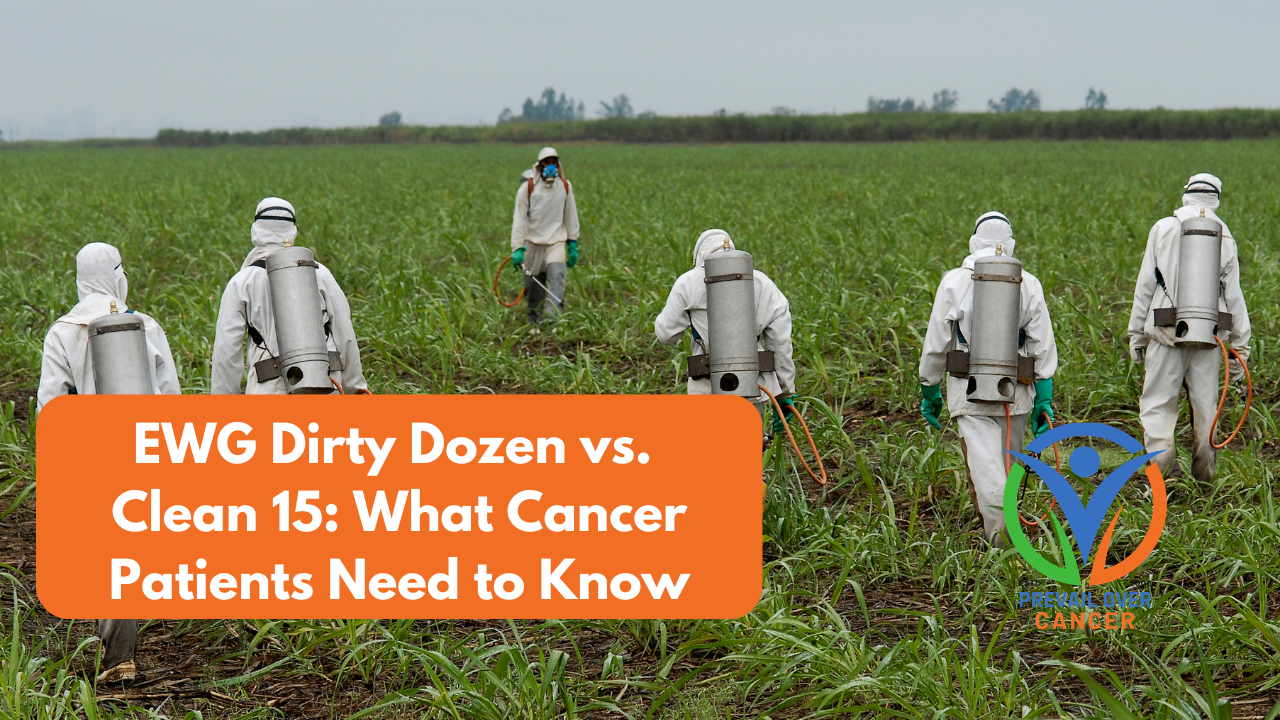
How to shop strategically, reduce pesticide exposure, and wash your produce the right way — including the evidence-based baking soda method.
If you or someone you love is navigating a cancer diagnosis, the food choices you make every single day matter. Not just in terms of nutrition, but in terms of what may be riding along on your produce when it arrives at your plate.
Every year, the Environmental Working Group (EWG) analyzes data from the U.S. Department of Agriculture (USDA) and the Food and Drug Administration (FDA) to identify which fruits and vegetables carry the highest — and lowest — levels of pesticide residues. Their findings are published as two iconic lists: the Dirty Dozen™ and the Clean 15™.
At Prevail Over Cancer, we follow the principle: Prevail. Assess. Don't Guess.™ That means making informed decisions grounded in real data — including the data on what's sprayed on your food.
This guide will walk you through both lists, explain why pesticide exposure matters in t...
Broccoli Sprouts and Cancer: The Science of Sulforaphane
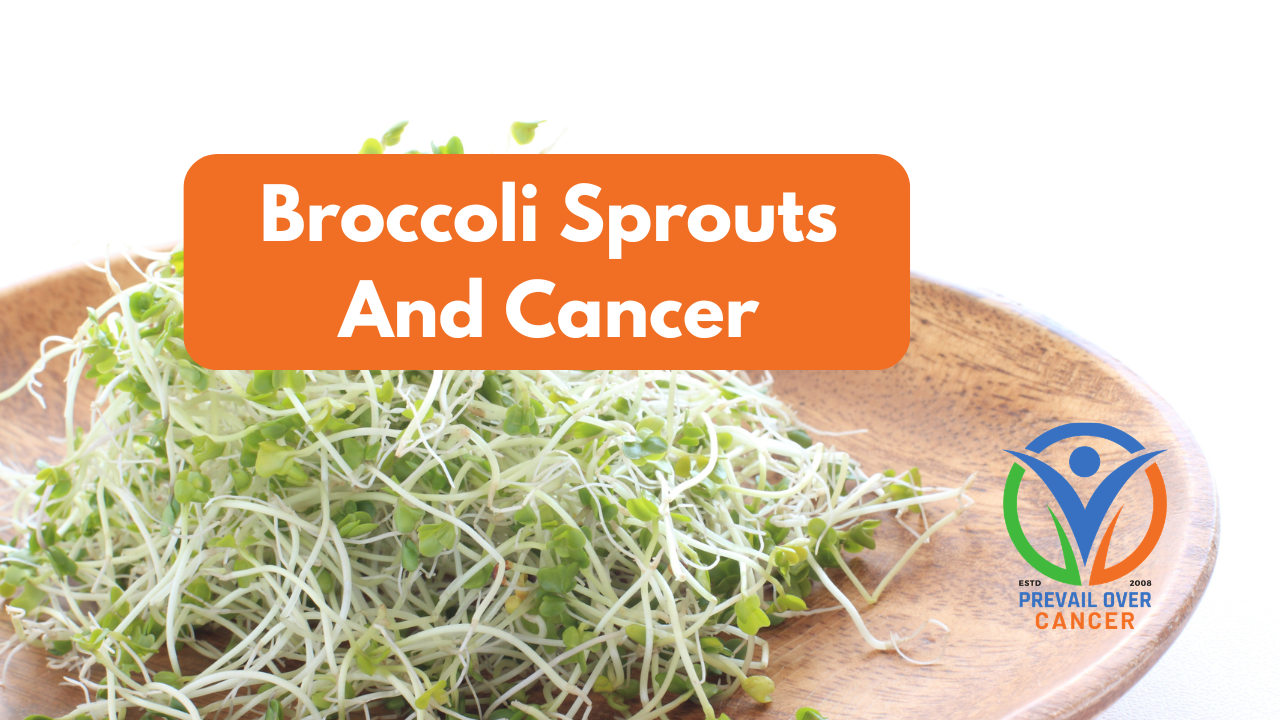
Broccoli Sprouts and Cancer: The Complete Science of Sulforaphane
If you add only one food to your anticancer nutrition plan, the research points strongly to one answer: broccoli sprouts. These tiny, unassuming seedlings — available at most grocery stores or easy to grow at home — contain concentrations of the most well-studied anticancer phytochemical on Earth.
That compound is sulforaphane (SFN) — an isothiocyanate derived from cruciferous vegetables that has now been investigated in over 3,000 published studies. And unlike many "superfoods" hyped on social media, sulforaphane's mechanisms are deeply understood at the molecular level, spanning cancer prevention, cancer stem cell targeting, chemotherapy enhancement, radiation sensitization, and immunotherapy support.
This research blog compiles everything the current science tells us about broccoli sprouts and cancer — including how sulforaphane works, how to maximize the amount you produce and absorb, and how it interacts with ...
Short-Term Fasting During Cancer Treatments

Researched and Written by Keith Bishop, Clinical Nutritionist, Cancer Coach, Retired Pharmacist, and founder of Prevail Over Cancer and the Prevail Protocol
Why Should We Consider Short-Term Fasting During Chemotherapy Treatments?
Short-term fasting (STF) has shown promise in enhancing the efficacy of cancer treatments while protecting healthy cells from toxicity. Studies suggest that STF can slow tumor growth and improve the quality of life for cancer patients.
Short-term fasting (STF) has shown promising effects on cancer cells in the human body, according to several medical journal references. Here are some key findings:
- Differential Stress Resistance (DSR): STF protects healthy cells from the toxic effects of chemotherapy while making cancer cells more vulnerable to treatment. This is because healthy cells can enter a maintenance and repair mode during fasting, while cancer cells, which rely heavily on glucose, struggle to adapt.
- Enhanced Chemotherapy Efficacy: Preclinica ...
Author
Keith Bishop
Clinical Nutritionist, Cancer Coach, Retired Pharmacist, Author
Keith Bishop founded Prevail Over Cancer and is a passionate advocate for cancer awareness and research. With a background in pharmacy and clinical nutrition I’m dedicated to providing insightful and empowering information to help clients, survivors, and caregivers navigate their journey. From personal experiences and a commitment to holistic health, Keith aims to inspire and support the cancer community through comprehensive and accessible content.
Join over 8,000 subscribers!
Get access to Keith's Prevail Over Cancer Newsletter with news, blogs, and updates!
Recent Posts
Blog Post Topics
All Categories- microbiome modulation in oncology
25 hydroxyvitamin d cancer prevention
active hexose correlated compound
akkermansia and chemotherapy synergy
akkermansia and gastric cancer
akkermansia and radiation therapy
akkermansia muciniphila and cancer