Pumpkin Seeds and Cancer: Evidence-Backed Benefits You Should Know
How pumpkin seeds support anticancer nutrition, key nutrients, research findings, and practical guidance.
Research and written by Keith Bishop, Cancer Coach, Clinical Nutritionist, Retired Pharmacist, and Founder of Prevail Over Cancer™ and the Prevail Protocol™
Pumpkin seeds—often treated as a simple snack—are quietly becoming one of the most compelling foods in anticancer nutrition. Rich in bioactive compounds, antioxidants, lignans, and unique proteins, these seeds have demonstrated promising effects in laboratory studies and population research. Below is a comprehensive, evidence-based look at what we know so far.
Anticancer Actions of Pumpkin Seeds
Pumpkin Seed Apoptosis-Inducing Activity
Pumpkin seed protein fractions have been shown to induce apoptosis (programmed cell death) in cancer cells, including liver (HepG2) and triple-negative breast cancer (MDA-MB-231) cell lines.[i]
Antioxidant & Anti-Inflammatory Effects
Pumpkin seeds contain phenolic compounds, tocopherols, and phytosterols that reduce oxidative stress and inflammation—two major drivers of cancer initiation and progression.[ii]
Inhibition of Cancer Cell Growth
Pumpkin seed oil and extracts have demonstrated antiproliferative effects in both in vitro and in vivo models.[iii]
Study: Multiple studies using crude pumpkin extracts and purified fractions show anticancer effects across several cancer cell lines.
Pumpkin Seeds Enhance Immune Strength
Pumpkin seeds support immune function and anticancer effects due to their mineral profile.[iv]
Key Anticancer Nutrients in Pumpkin Seeds
Pumpkin seeds are rich in compounds known to influence cancer biology:
|
Nutrient / Compound |
Anticancer Mechanism |
|
Lignans (e.g., secoisolariciresinol) |
Modulate estrogen pathways; support hormone‑related cancer protection |
|
Phytosterols |
Reduce inflammation; may inhibit tumor growth |
|
Tocopherols (Vitamin E) |
Antioxidant protection against DNA damage |
|
Phenolic compounds |
Reduce oxidative stress; support detoxification |
|
2S Albumin proteins |
Demonstrated cytotoxicity toward breast cancer cells |
|
Magnesium & Zinc |
Support immune function and DNA repair |
|
Healthy fats (MUFA/PUFA) |
Support metabolic health and reduce chronic inflammation |
Pumpkin Seed Typical Serving Size
A standard serving is:
- 1 ounce (28 grams)
- ~ ¼ cup (that's about ½ of a palm according to the downloadable Palm Rule for Cancer Foods Guide.
- Provides ~ 150 calories, 7 grams of protein, and a dense package of minerals and antioxidants.
This serving size is commonly used in observational studies evaluating nut and seed intake and cancer risk.
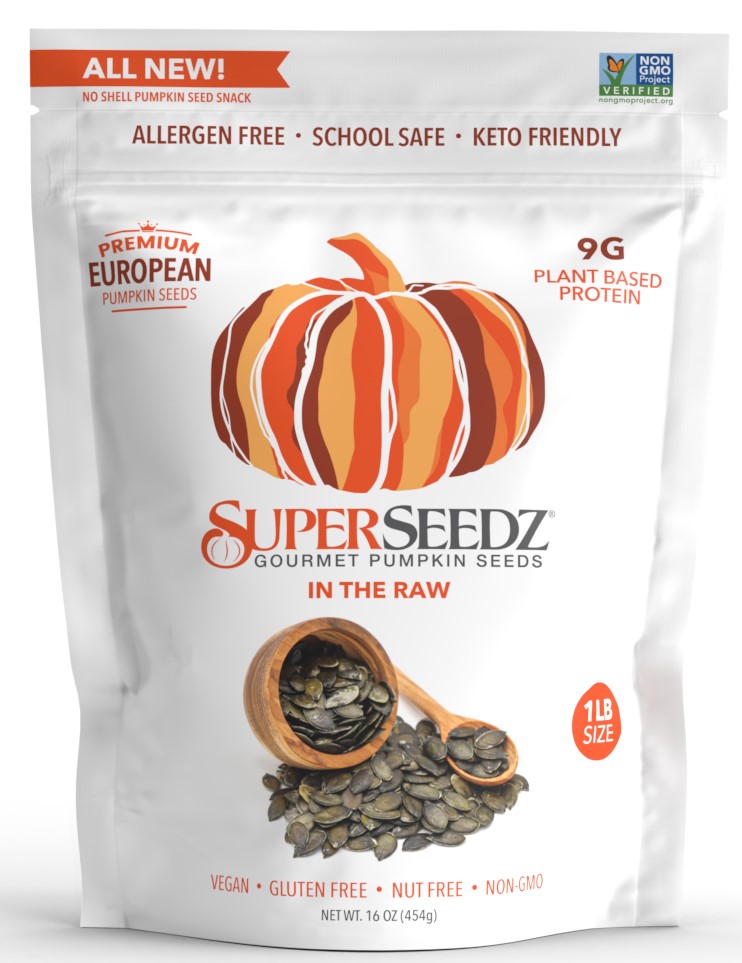
Check out my favorite pumpkin seed, SuperSeedz. I’ve even got a discount code for you!
Cancers With Observed Reduced Risk with Pumpkin Seed Products
Breast Cancer
Regular pumpkin seed consumption has been associated with a lower risk of breast cancer in observational research.
Mechanism: Lignans and 2S albumin proteins appear to play a role.[v]
Prostate Cancer
Pumpkin seed extracts and oils have shown antiproliferative effects in prostate cancer models.
Mechanisms[vi]: Induction of the mitochondrial apoptosis (normal cell death) pathway and autophagy may inhibit tumor growth.[vii] [viii]
Papillary thyroid carcinoma (PTC)
Mechanism: Pumpkin seed extracts caused cancer cell death in laboratory cell studies.[ix]
Colon Cancer
Animals consuming pumpkin seed extracts had less colon hyperplasia (pre-cancerous extra cell growth) and ACF (Aberrant Crypt Foci).[x]
Are Any Cancers at Increased Risk with pumpkin seeds?
Currently, no medical journal studies suggest that pumpkin seeds increase the risk of any cancer.
They are generally considered safe, nutrient-dense, and metabolically supportive.
The only caution:
- Excessive intake may contribute to a calorie surplus in individuals with metabolic challenges.
- Seed oils (not whole seeds) may behave differently due to isolated linoleic acid content, but this does not apply to whole pumpkin seeds.
Additional Pumpkin Seed Benefits Worth Highlighting
- Metabolic support: Pumpkin seed proteins improved glucose uptake and insulin signaling in cell models.
- Hormone balance: Lignans may support estrogen metabolism.
- Mineral density: High magnesium and zinc support immune resilience.
- Anti-inflammatory effects: Beneficial for reducing chronic inflammation linked to cancer progression.
How to Use Pumpkin Seeds Daily
- Add to smoothies
- Sprinkle on salads or roasted vegetables
- Mix into oatmeal or yogurt
- Blend into homemade seed butter
- Use as a crunchy topping for soups
- Combine with other anticancer seeds (flax, chia, sesame)
Prevail Over Cancer: Your Partner in Evidence-Based Cancer Nutrition
At Prevail Over Cancer, we help patients, caregivers, and clinicians cut through misinformation and build confidence with evidence-based, actionable strategies.
We provide:
- The Prevail Over Cancer Learning Center — free, science-backed articles and guides
https://www.prevailovercancer.com/learning-center - Cancer Nutrition Academy Courses — deep‑dive modules on anticancer foods, metabolic strategies, and terrain-based nutrition
https://www.prevailovercancer.com/academy - 1:1 Personalized Cancer Coaching — tailored guidance for patients and caregivers
https://www.prevailovercancer.com/coaching - The Prevail Over Cancer Podcast Show — expert interviews and practical insights
https://youtube.com/playlist?list=PLBC_ThCJPWZvnLxWSIVuvyCMJa0Ce5nya&si=Gka0MokzgC1Dppgx
Pumpkin Seed Cancer References
[i] Vinayashree, S., Hemakumar, C., Veeranna, R.P. et al. In Vitro Studies of Pumpkin (Cucurbita moschata var. Kashi Harit) Seed Protein Fraction(s) to Evaluate Anticancer and Antidiabetic Properties. Plant Foods Hum Nutr 79, 632–640 (2024). https://doi.org/10.1007/s11130-024-01205-7
[ii] Batool, M., Ali Nawaz Ranjha, M. M., Roobab, U., Manzoor, M. F., Farooq, U., Nadeem, H. R., Nadeem, M., Kanwal, R., AbdElgawad, H., Al Jaouni, S. K., Selim, S., & Ibrahim, S. A. (2022). Nutritional Value, Phytochemical Potential, and Therapeutic Benefits of Pumpkin (Cucurbita sp.). Plants, 11(11), 1394. https://doi.org/10.3390/plants11111394
[iii] Ghosh R, Fatima N, Abul Vafa, Syed, Saima Wajid. In-vitro assessment of anti-breast cancer potential of pumpkin seed oil nanoemulsion with mechanistic insights into cytotoxicity and apoptosis. Scientific Reports. 2025;15(1). doi: https://doi.org/10.1038/s41598-025-12532-3
[iv] Raza, N., Sadaf, A., Mushtaq, R., Mehmood, M. A., Amrao, L., Islam, F., Afzaal, M., & Shah, M. A. (2026). Nutritional and Health Potential of Edible Seeds: Micronutrient Bioavailability and Mechanistic Insights. Food Science & Nutrition, 14(2), e71480. https://doi.org/10.1002/fsn3.71480
[v] Zaineddin AK, Buck K, Vrieling A, et al. The association between dietary lignans, phytoestrogen-rich foods, and fiber intake and postmenopausal breast cancer risk: a German case-control study. Nutr Cancer. 2012;64(5):652-665. doi:10.1080/01635581.2012.683227 https://pubmed.ncbi.nlm.nih.gov/22591208/
[vi] Nomikos, T., Gioti, K., Tsoukala, M., & Tenta, R. (2021). Pumpkin Seed Extracts Inhibit Proliferation and Induce Autophagy in PC-3 Androgen Insensitive Prostate Cancer Cells. Journal of Medicinal Food. https://doi.org/10.1089_jmf.2020.0200
[vii] Nasrullah, M. Z., Binmahfouz, L. S., Bagher, A. M., Hareeri, R. H., Bin-Melaih, H. H., Abuzinadah, O. A., Malebari, A. M., Abdel-Naim, A. B., & Neamatallah, T. (2025). Piceatannol and Pumpkin Seed Oil Synergistically Promote Apoptosis of PC3 Prostate Cancer Cells via Intrinsic Mitochondrial Pathway. ACS Omega, 10(44), 52202. https://doi.org/10.1021/acsomega.4c11639
[viii] Medjakovic, S., Hobiger, S., Ardjomand-Woelkart, K., Bucar, F., & Jungbauer, A. (2016). Pumpkin seed extract: Cell growth inhibition of hyperplastic and cancer cells, independent of steroid hormone receptors. Fitoterapia, 110, 150-156. https://doi.org/10.1016/j.fitote.2016.03.010
[ix] Bahadori MH, Azari Z, Zaminy A, Dabirian S, Mehrdad SM, Kondori BJ. Anti-proliferative and apoptotic effects of hull-less pumpkin extract on human papillary thyroid carcinoma cell line. Anatomy & Cell Biology. 2021;54(1):104-111. doi: https://doi.org/10.5115/acb.20.228
[x] Chari, K. Y., Polu, P. R., & Shenoy, R. R. (2018). An Appraisal of Pumpkin Seed Extract in 1, 2-Dimethylhydrazine Induced Colon Cancer in Wistar Rats. Journal of Toxicology, 2018(1), 6086490. https://doi.org/10.1155/2018/6086490
Author

Keith Bishop
Clinical Nutritionist, Cancer Coach, Retired Pharmacist, Author
Keith Bishop founded Prevail Over Cancer and is a passionate advocate for cancer awareness and research. With a background in pharmacy and clinical nutrition I’m dedicated to providing insightful and empowering information to help clients, survivors, and caregivers navigate their journey. From personal experiences and a commitment to holistic health, Keith aims to inspire and support the cancer community through comprehensive and accessible content.
Join over 8,000 subscribers!
Get access to Keith's Prevail Over Cancer Newsletter with news, blogs, and updates!
Recent Posts
Blog Post Topics
All Categories- microbiome modulation in oncology
25 hydroxyvitamin d cancer prevention
active hexose correlated compound
akkermansia and chemotherapy synergy
akkermansia and gastric cancer
akkermansia and radiation therapy
akkermansia muciniphila and cancer