
How Much Coffee Fights Cancer? Evidence‑Based Benefits Explained
Does Coffee Protect Against Cancer? A Deep Dive into the Studies and Controversies
Researched and Written by Keith Bishop, Clinical Nutritionist, Cancer Coach, Retired Pharmacist, and Founder of Prevail Over Cancer
Coffee appears to have some significant cancer-fighting benefits.👏👏👏 According to 📚medical research, coffee is associated with a reduced risk of cancer. There’s even a study that found higher coffee consumption is associated with reduced mortality from colorectal cancer.
Several compounds found in coffee possess antioxidant, anti-inflammatory, and insulin-sensitizing effects, which may contribute to anticancer activity.
In most studies, 3 ☕️☕️☕️ or more cups daily provide better protection than 1 cup daily. If you are sensitive to caffeine, you may have to limit your consumption, dilute the coffee, drink early in the day, or switch to naturally decaffeinated. Naturally decaffeinated coffee will not have as many beneficial anti-cancer ingredients.
The strongest anticanc...
Green Tea, Matcha, and Black Tea: Evidence-Backed Anticancer Benefits You Can Use Every Day
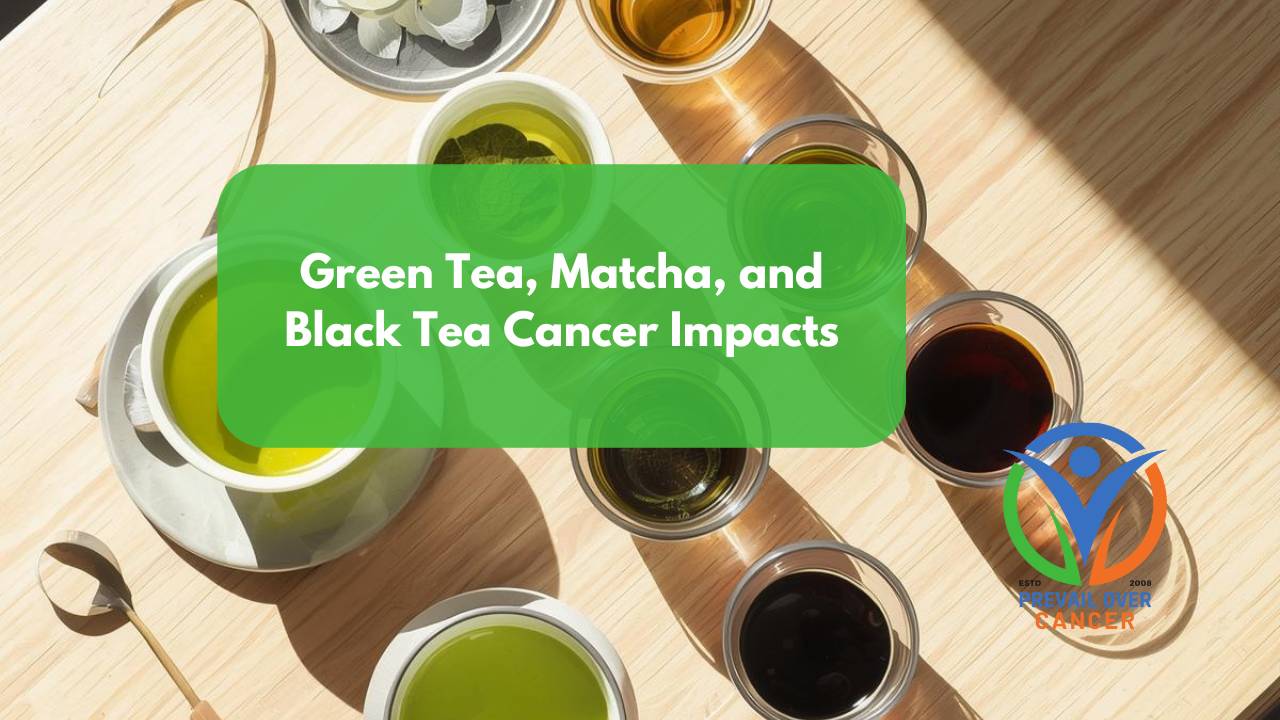
How Tea Polyphenols Support Cellular Health, Reduce Oxidative Stress, Counteract Damage from Processed Foods, and Reduce Cancer Risks
Tea is one of the most widely consumed beverages in the world—and one of the most researched. Green tea, matcha, and black tea all come from the Camellia sinensis plant, yet each offers unique anticancer benefits thanks to differences in processing, polyphenol content, and antioxidant potency.
For people with cancer and caregivers looking for simple, daily habits that support an anticancer lifestyle, tea is a powerful, evidence-supported place to start.
Smart Beverage Pairing Seminar Handout
Why Tea Matters for Cancer Prevention
Tea is rich in polyphenols, plant compounds that help protect cells from oxidative stress, inflammation, and DNA damage—three biological processes closely linked to cancer development.
The most studied polyphenols include:
- Catechins (especially EGCG) in green tea
- Theaflavins and thearubigins in black tea
- Concentrated c...
This is why I eat Walnuts daily: Unlocking Urolithin A for Cancer Prevention and Gut Health
Soaking walnuts may sabotage your body’s ability to produce Urolithin A—a gut-derived compound with powerful anticancer, anti-inflammatory, and mitochondrial energy benefits. Here’s what science says and how to compensate.
Researched and Written by Keith Bishop, Clinical Nutritionist, Cancer Coach, Retired Pharmacist, and Founder of Prevail Over Cancer
In the evolving landscape of integrative oncology and precision nutrition, few compounds have sparked as much interest as Urolithin A (UA)—a gut-derived metabolite with compelling anticancer, anti-inflammatory, and mitochondrial-enhancing properties. Let’s unpack what it is, how it’s made, and how to harness its full potential.
What Is Urolithin A and Where Does It Come From?
Urolithin A is not found directly in food. Instead, it’s a postbiotic—a compound produced by your gut microbiota when they metabolize ellagitannins, polyphenols found in:
- Pomegranates
- Walnuts
- Raspberries
- Strawberries
- Pecans
Once consumed, ellagitan...
Author

Keith Bishop
Clinical Nutritionist, Cancer Coach, Retired Pharmacist, Author
Keith Bishop founded Prevail Over Cancer and is a passionate advocate for cancer awareness and research. With a background in pharmacy and clinical nutrition I’m dedicated to providing insightful and empowering information to help clients, survivors, and caregivers navigate their journey. From personal experiences and a commitment to holistic health, Keith aims to inspire and support the cancer community through comprehensive and accessible content.
Join over 8,000 subscribers!
Get access to Keith's Prevail Over Cancer Newsletter with news, blogs, and updates!
Recent Posts
Blog Post Topics
All Categories- microbiome modulation in oncology
25 hydroxyvitamin d cancer prevention
active hexose correlated compound
akkermansia and chemotherapy synergy
akkermansia and gastric cancer
akkermansia and radiation therapy
akkermansia muciniphila and cancer