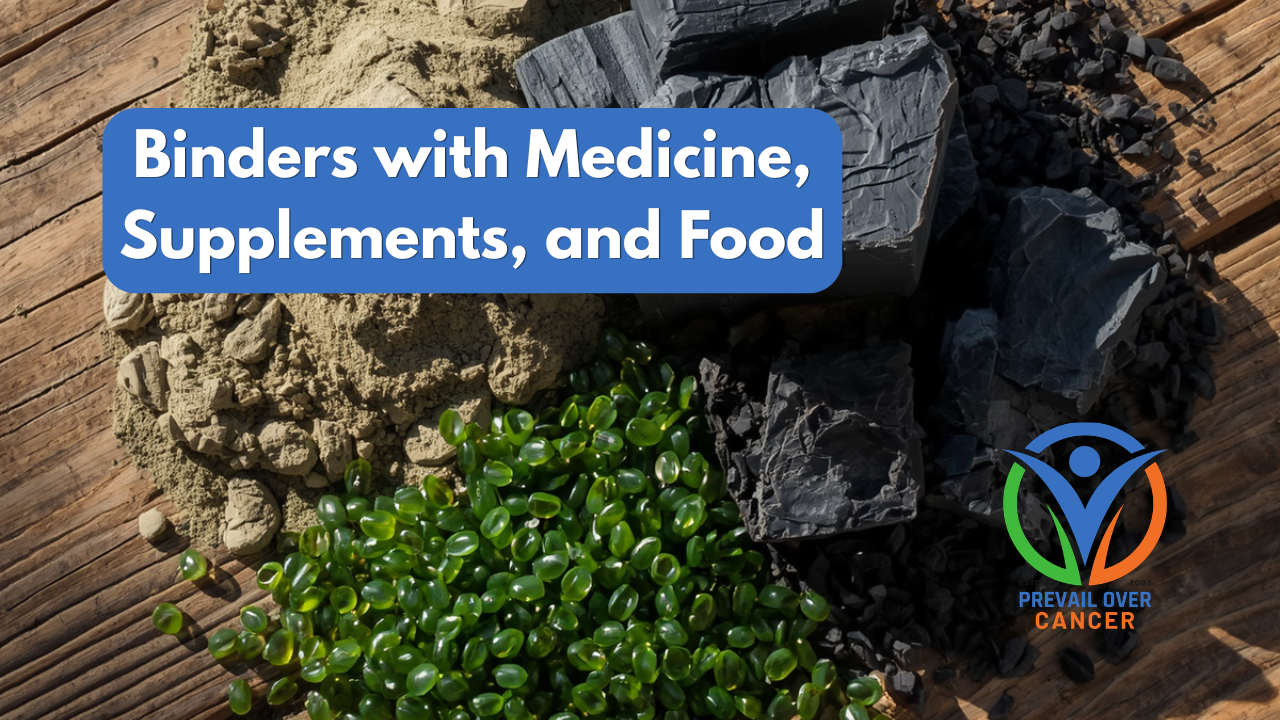
How Binders Block Your Drugs, Supplements, and Food
Researched and written by Keith Bishop, Integrative Cancer Educator, Cancer Coach, Clinical Nutritionist, Retired Pharmacist, and Founder of Prevail Over Cancer.
The Big Idea in Plain Language
Binders are sticky on the inside. They grab things. That sounds helpful when the thing is a toxin or a heavy metal. But binders are not smart. They cannot tell the difference between a toxin, your prescription drug, your fish oil, and the iron in your dinner.
If you take a binder at the wrong time, you can block the very things that are keeping you alive and helping you heal.
This blog walks you through what each binder does, what it can take from you, and how to time them safely. We will also look at the rare times binders are truly needed.
Quick Look at the Big Five Binders
| Binder | What It Is | Main Use |
|---|---|---|
| Activated Charcoal | Heated carbon with tiny pores | Acute poisoning in the ER |
| Zeolite (Clinoptilolite) | Volcanic mineral with a cage shape | Heavy metal support |
Do Binders Help Fight Cancer? Separating Hype from Evidence.
Exploring the claims, risks, and realities of binders in cancer care—from anecdotal buzz to scientific silence.
Researched and written by Keith Bishop, Integrative Cancer Educator, Cancer Coach, Clinical Nutritionist, Retired Pharmacist, and Founder of Prevail Over Cancer.
What Are “Binders” in Cancer Circles?
In integrative and alternative cancer communities, “binders” refer to substances that claim to “bind” toxins, heavy metals, microbial byproducts, or treatment-related metabolites in the gut. Popular examples include:
|
Binder Type |
Common Examples |
Claimed Function |
|
Clay-based |
Bentonite, zeolite |
Bind metals, mycotoxins |
|
Charcoal-based |
Activated charcoal |
Adsorb chemicals, reduce gas |
|
Fiber-based |
Psyllium, modified citrus pectin |
Trap bile acids, support detox |
|
Resin-based |
Cholestyramine |
Bind bile acids, reduce inflammation |
These are often promoted alongside repurposed drugs like ...
Author

Keith Bishop
Clinical Nutritionist, Cancer Coach, Retired Pharmacist, Author
Keith Bishop founded Prevail Over Cancer and is a passionate advocate for cancer awareness and research. With a background in pharmacy and clinical nutrition I’m dedicated to providing insightful and empowering information to help clients, survivors, and caregivers navigate their journey. From personal experiences and a commitment to holistic health, Keith aims to inspire and support the cancer community through comprehensive and accessible content.
Join over 8,000 subscribers!
Get access to Keith's Prevail Over Cancer Newsletter with news, blogs, and updates!
Recent Posts
Blog Post Topics
All Categories- microbiome modulation in oncology
25 hydroxyvitamin d cancer prevention
active hexose correlated compound
akkermansia and chemotherapy synergy
akkermansia and gastric cancer
akkermansia and radiation therapy
akkermansia muciniphila and cancer