
Fenbendazole vs Mebendazole vs Ivermectin: Cancer
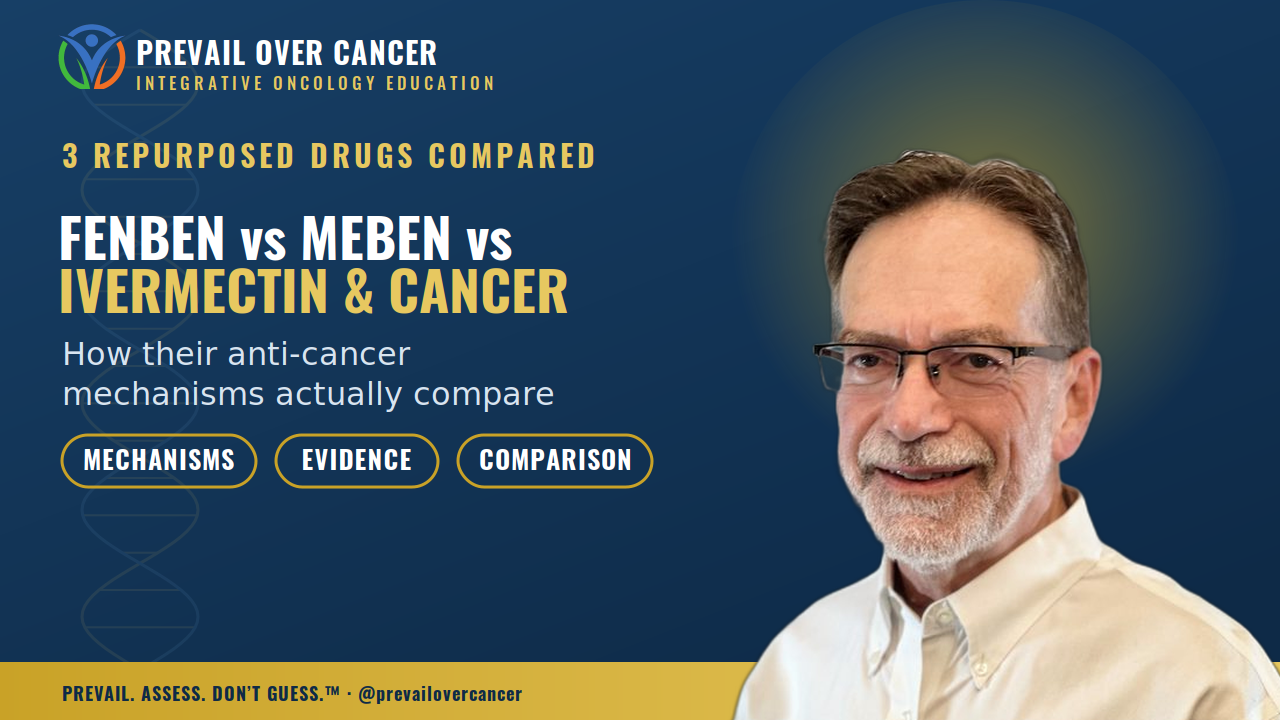
Three Antiparasitic Worm Medicines Scientists Are Studying for Cancer
Researched and Written by Keith Bishop, Clinical Nutritionist, Cancer Coach, Retired Pharmacist, Integrative Oncology Educator
You may have heard people talk about three medicines: fenbendazole, mebendazole, and ivermectin. All three were made to kill parasitic worms or bugs, not cancer. But scientists are now studying them to see if they can also fight cancer cells.
These three medicines are not the same. They work in different ways. This article explains what each one does, how they are alike, and how they are different — using easy words and short sentences.
This article will not tell you to take these drugs. It also won't tell you to avoid them. It just explains what scientists have found so far, in plain language.
What Do All Three Have in Common?
Fenbendazole and mebendazole come from the same drug family. They are both called "benzimidazoles," which is just a fancy word for a type of dewormer.
Iver
...Fenbendazole, Ivermectin & p53: Anticancer Research
Fenbendazole and Ivermectin in Cancer Care: What the Research Actually Shows
A clinical nutritionist's review of mechanisms — including p53 reactivation, microtubule disruption, glycolysis inhibition, and immune synergy — for two of the most-discussed repurposed antiparasitics in integrative oncology.
Researched and written by Keith Bishop, Integrative Cancer Educator, Cancer Coach, Clinical Nutritionist, Retired Pharmacist, and Founder of Prevail Over Cancer.
You've heard the names. A friend mentioned them. A YouTube video swore by them. A Facebook group of 100,000 members says they cured stage IV cancer. And your oncologist either rolled their eyes or warned you against them.
So what is actually true about fenbendazole and ivermectin in cancer care?
After three decades as a pharmacist and now as a clinical nutritionist and cancer coach working with patients every day, I want to walk you through what the published research actually shows — the mechanisms, the preclinical data, th...
Author

Keith Bishop
Clinical Nutritionist, Cancer Coach, Retired Pharmacist, Author
Keith Bishop founded Prevail Over Cancer and is a passionate advocate for cancer awareness and research. With a background in pharmacy and clinical nutrition I’m dedicated to providing insightful and empowering information to help clients, survivors, and caregivers navigate their journey. From personal experiences and a commitment to holistic health, Keith aims to inspire and support the cancer community through comprehensive and accessible content.
Join over 8,000 subscribers!
Get access to Keith's Prevail Over Cancer Newsletter with news, blogs, and updates!
Recent Posts
Blog Post Topics
All Categories- microbiome modulation in oncology
25 hydroxyvitamin d cancer prevention
active hexose correlated compound
akkermansia and chemotherapy synergy
akkermansia and gastric cancer
akkermansia and radiation therapy
akkermansia muciniphila and cancer