
Awakening the Guardian: Restoring p53 Against Cancer
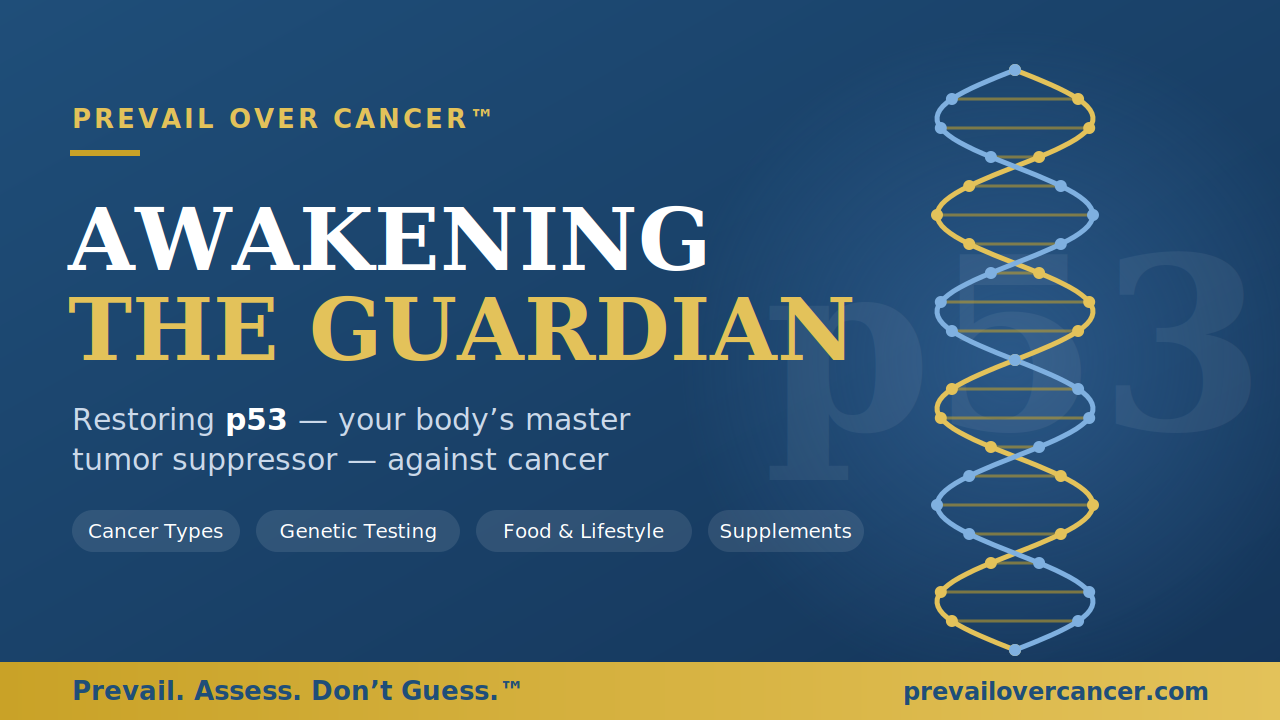
Which cancers involve p53, how to test for it, and the food, lifestyle, supplements, and repurposed medications that support your master tumor suppressor.
Restoring p53 — Your Body's Master Tumor Suppressor — Against Cancer
By Keith Bishop — Clinical Nutritionist, Cancer Coach, Retired Pharmacist, Integrative Oncology Educator, Founder of Prevail Over Cancer
|
IMPORTANT — Please Read This article is educational and is not medical advice, diagnosis, or treatment. It does not replace your oncology team. These statements have not been evaluated by the Food and Drug Administration; nothing here is intended to diagnose, treat, cure, or prevent any disease. No dosing is provided. Integrative strategies are meant to complement — never replace — conventional cancer care. Always review any food, supplement, or medication decision with your physician and pharmacist, especially during active treatment. |
Deep inside nearly every cell in your body sits a single protein that ...
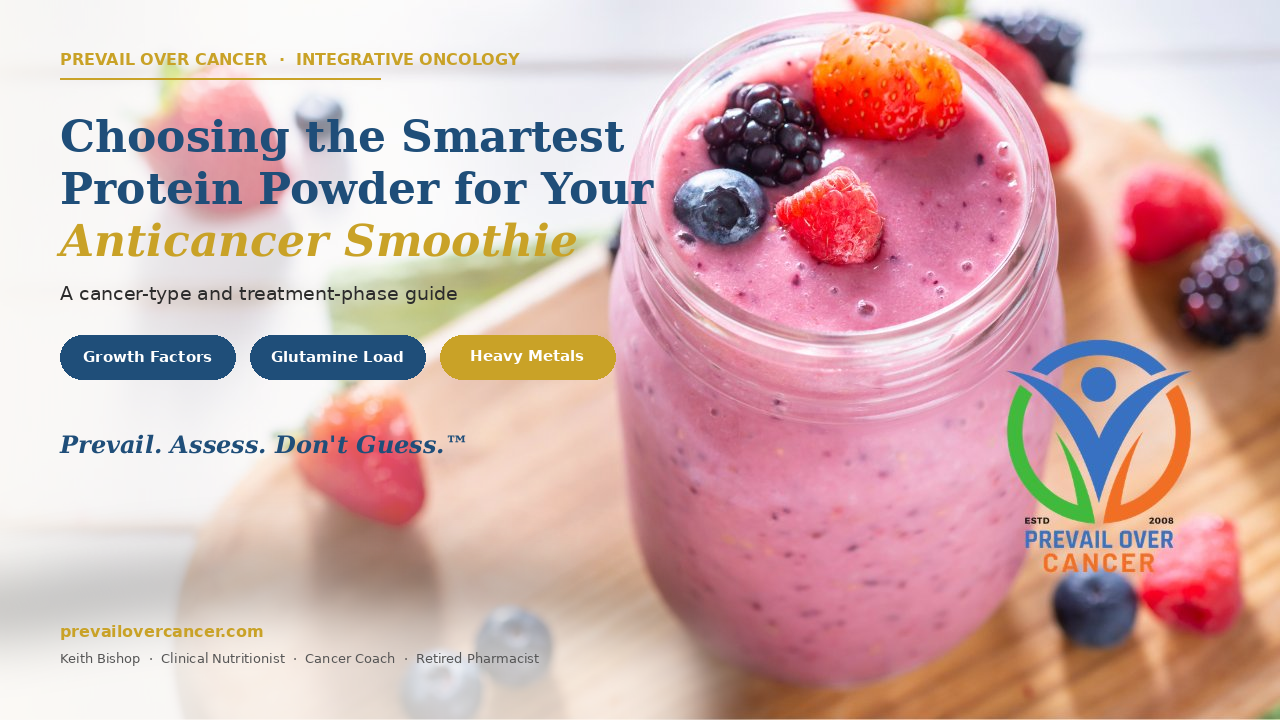
Choosing the Smartest Protein Powder for Your Anticancer Smoothie: A Cancer-Type and Treatment-Phase Guide
Prevail. Assess. Don't Guess.™
By Keith Bishop — Clinical Nutritionist, Cancer Coach, Retired Pharmacist, Integrative Oncology Educator, and Founder of Prevail Over Cancer LLC™ and the Prevail Protocol™
IMPORTANT — Please Read Before Using This Document
This article is for educational purposes only. It does not replace medical advice from your oncologist, physician, or licensed clinician. These statements have not been evaluated by the Food and Drug Administration. Supplements are not intended to diagnose, treat, cure, or prevent any disease.
Why the Scoop You Choose Actually Matters
A morning smoothie is one of the easiest places to load real anticancer firepower into your day — phytochemicals from berries and cruciferous sprouts, omega-3s, fiber, and protein to hold your blood sugar steady and protect your lean mass during treatment. But the protein powder you choose can either support the goals of your integrative oncology plan or quietly work against them.
Three filter...
The Cancer Trend Most Patients Never See
Why a single lactate dehydrogenase result tells you very little — and how a pattern of LDH tests across time can show you whether your cancer is advancing, retreating, or holding steady.
IMPORTANT — Please Read Before Using This Document This material is for educational purposes only and is not intended to diagnose, treat, cure, or prevent any disease. Statements regarding dietary supplements have not been evaluated by the FDA. Always consult your qualified healthcare practitioner before making changes to your protocol.
A Snapshot vs. a Movie
A single LDH result is a snapshot. It tells you where the number sits today — and very little else.
A series of LDH results is something else entirely. It's a movie. It tells you which direction the metabolic engine of your cancer is moving. It tells you whether your tumor burden is climbing, plateauing, or shrinking. It tells you whether your current treatment — conventional, integrative, or both — is actually working at the cellular ...
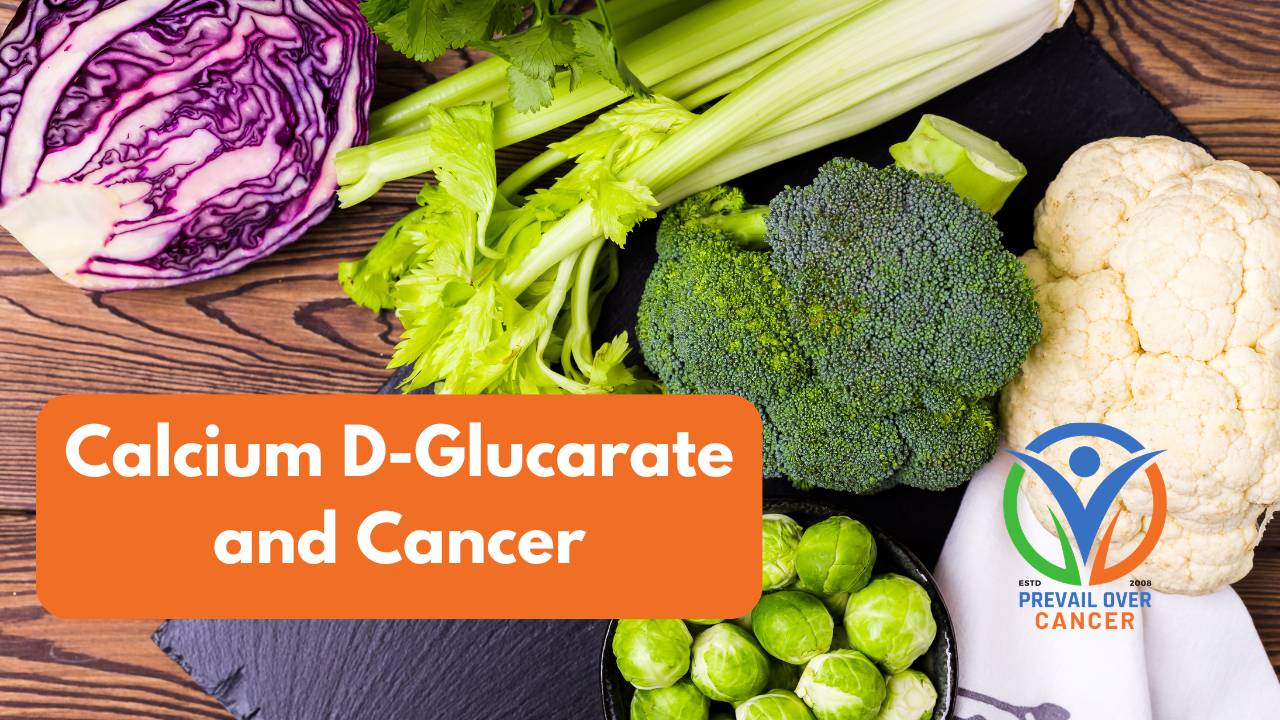
Calcium D-Glucarate: The Enzyme Blocker That Supports Hormonal Detox and Cancer Chemoprevention
By Keith Bishop | Clinical Nutritionist, Cancer Coach, Retired Pharmacist | Prevail Over Cancer
If your liver has already done the hard work of neutralizing a toxin or excess hormone — but your gut is quietly undoing all of that work before it can leave your body — you have an enzyme problem.
That enzyme is called beta-glucuronidase. And one of the most-researched natural compounds for addressing it is calcium D-glucarate.
In this post, we'll break down exactly what calcium D-glucarate is, how it works at the biochemical level, what the research shows across multiple cancer types, and where it fits inside a comprehensive integrative oncology protocol.
What Is Calcium D-Glucarate?
Calcium D-glucarate is the calcium salt of D-glucaric acid — a naturally occurring compound produced in small amounts by the human body and found abundantly in a variety of plant foods. The calcium is there for stability in supplement form. The active ingredient is the glucarate portion.
Glucaric a...
Why I Often Recommend Certain Herbal Supplements and Fenbendazole Before Meals
I often recommend taking Herbs, Onco-Adjunct Pathways, Stabilized R-Lipoic Acid Supreme, and Fenbendazole before meals.
Researched & written by Keith Bishop, Integrative Cancer Educator, Cancer Coach, Clinical Nutritionist, Founder of Prevail Over Cancer and the Prevail Protocol, and Retired Pharmacist.
Cancer Cells Thrive on Glucose and L-Glutamine: Insights from Dr. Thomas Seyfried
Dr. Thomas Seyfried, PhD, has extensively researched how cancer cells depend on glucose and L-glutamine for their growth and proliferation. Cancer cells exhibit altered metabolism, relying heavily on glucose (the Warburg effect) and L-glutamine (an amino acid) to fuel their rapid division and growth. By disrupting these metabolic pathways, we can effectively starve cancer cells and inhibit their growth.
The Benefits of Onco-Adjunct Pathway Supplements and L-Glutamine
Taking Onco-Adjunct Pathway 2, 3, 3+, 4, and Stabilized R-Lipoic Acid Supreme™ before meals can enhance the absorption of nutrients ...
Can Green Tea Help Fight Cancer? Evidence‑Backed Insights

Unveiling the Power of Green Tea, Matcha, and EGCG: A Natural Ally in Cancer Prevention and Treatment
Written by Keith Bishop, Clinical Nutritionist, Cancer Coach, Retired Pharmacist, and Founder of Prevail Over Cancer.
In my ongoing quest to empower our community with knowledge and tools to prevail over cancer, I turn my focus to one of nature's most potent gifts: green tea. Revered for centuries for its healing properties, green tea has emerged as a beacon of hope in cancer prevention. Join me as I delve into the science behind green tea's anticancer benefits and explore how integrating this miraculous beverage into our daily routine can fortify our defenses against this formidable adversary.
Green Tea: The Cancer Antioxidant Powerhouse
At the heart of green tea's anticancer prowess lies its rich concentration of antioxidants, particularly catechins. Epigallocatechin-3-gallate (EGCG), the most abundant and powerful catechin in green tea, has been extensively studied for its a...
Author

Keith Bishop
Clinical Nutritionist, Cancer Coach, Retired Pharmacist, Author
Keith Bishop founded Prevail Over Cancer and is a passionate advocate for cancer awareness and research. With a background in pharmacy and clinical nutrition I’m dedicated to providing insightful and empowering information to help clients, survivors, and caregivers navigate their journey. From personal experiences and a commitment to holistic health, Keith aims to inspire and support the cancer community through comprehensive and accessible content.
Join over 8,000 subscribers!
Get access to Keith's Prevail Over Cancer Newsletter with news, blogs, and updates!
Recent Posts
Blog Post Topics
All Categories- microbiome modulation in oncology
25 hydroxyvitamin d cancer prevention
active hexose correlated compound
akkermansia and chemotherapy synergy
akkermansia and gastric cancer
akkermansia and radiation therapy
akkermansia muciniphila and cancer