
Awakening the Guardian: Restoring p53 Against Cancer
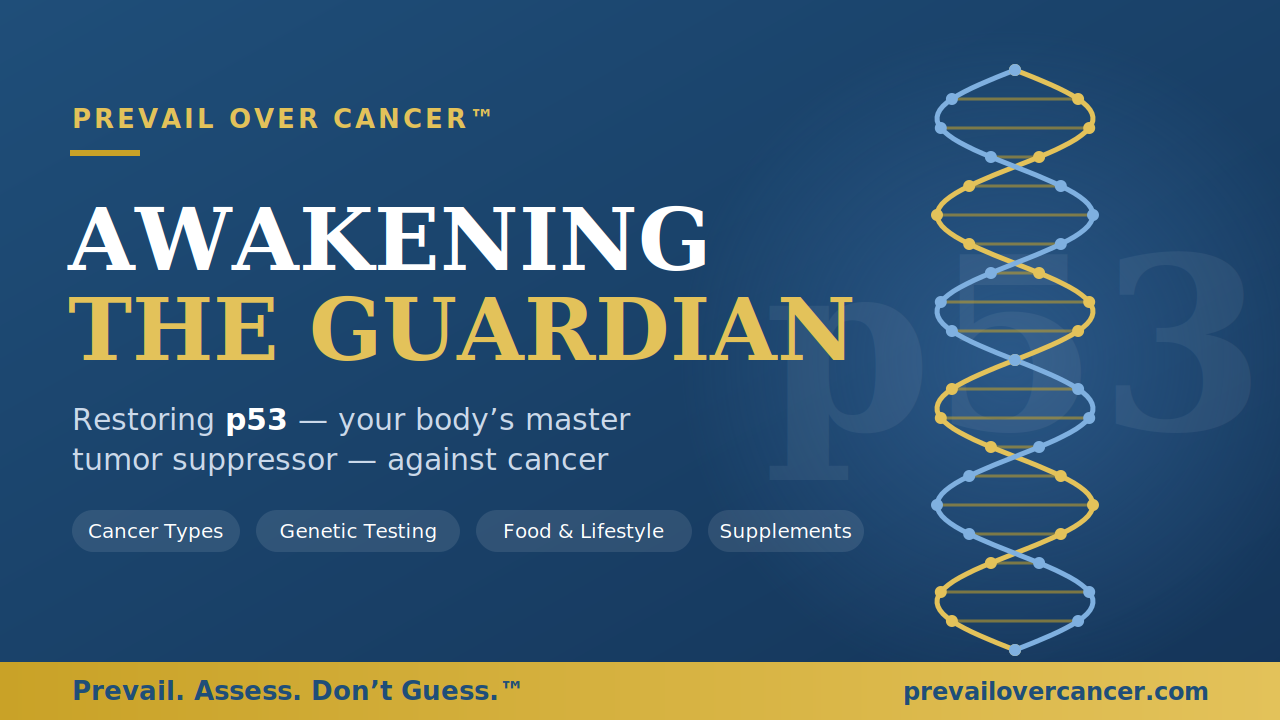
Which cancers involve p53, how to test for it, and the food, lifestyle, supplements, and repurposed medications that support your master tumor suppressor.
Restoring p53 — Your Body's Master Tumor Suppressor — Against Cancer
By Keith Bishop — Clinical Nutritionist, Cancer Coach, Retired Pharmacist, Integrative Oncology Educator, Founder of Prevail Over Cancer
|
IMPORTANT — Please Read This article is educational and is not medical advice, diagnosis, or treatment. It does not replace your oncology team. These statements have not been evaluated by the Food and Drug Administration; nothing here is intended to diagnose, treat, cure, or prevent any disease. No dosing is provided. Integrative strategies are meant to complement — never replace — conventional cancer care. Always review any food, supplement, or medication decision with your physician and pharmacist, especially during active treatment. |
Deep inside nearly every cell in your body sits a single protein that ...
Broccoli Sprouts and Cancer: The Science of Sulforaphane
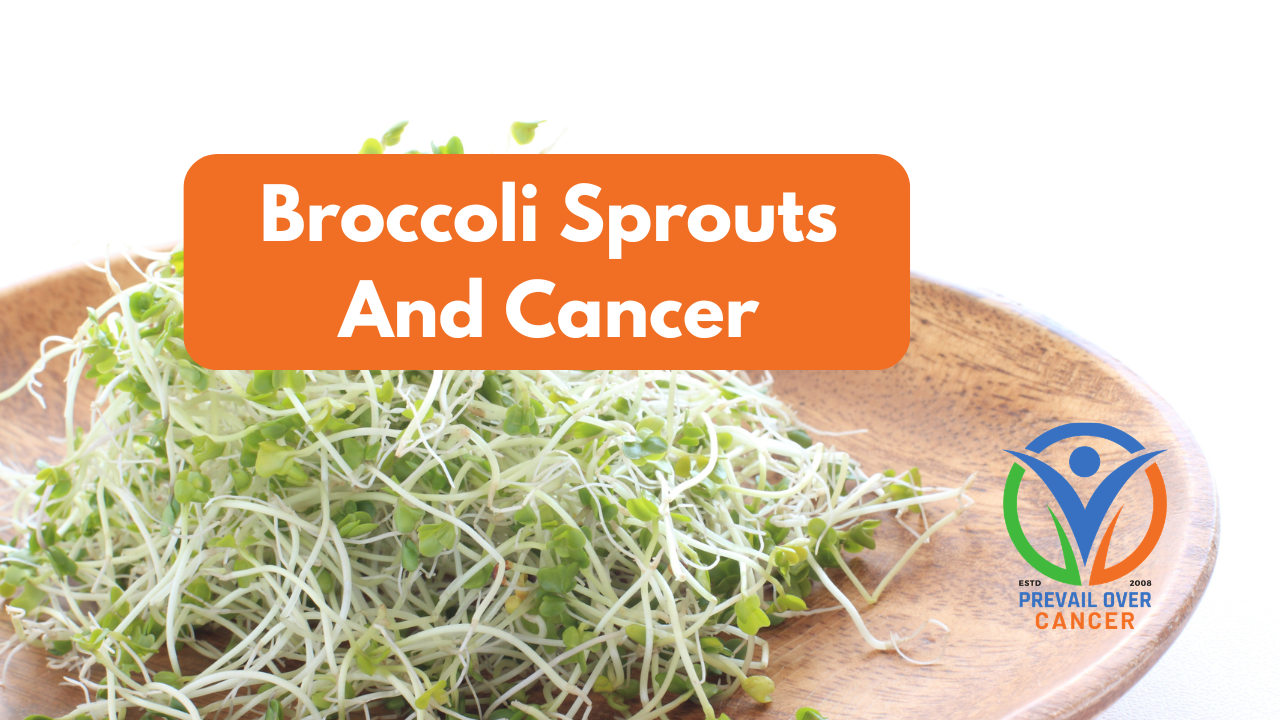
Broccoli Sprouts and Cancer: The Complete Science of Sulforaphane
If you add only one food to your anticancer nutrition plan, the research points strongly to one answer: broccoli sprouts. These tiny, unassuming seedlings — available at most grocery stores or easy to grow at home — contain concentrations of the most well-studied anticancer phytochemical on Earth.
That compound is sulforaphane (SFN) — an isothiocyanate derived from cruciferous vegetables that has now been investigated in over 3,000 published studies. And unlike many "superfoods" hyped on social media, sulforaphane's mechanisms are deeply understood at the molecular level, spanning cancer prevention, cancer stem cell targeting, chemotherapy enhancement, radiation sensitization, and immunotherapy support.
This research blog compiles everything the current science tells us about broccoli sprouts and cancer — including how sulforaphane works, how to maximize the amount you produce and absorb, and how it interacts with ...
Author
Keith Bishop
Clinical Nutritionist, Cancer Coach, Retired Pharmacist, Author
Keith Bishop founded Prevail Over Cancer and is a passionate advocate for cancer awareness and research. With a background in pharmacy and clinical nutrition I’m dedicated to providing insightful and empowering information to help clients, survivors, and caregivers navigate their journey. From personal experiences and a commitment to holistic health, Keith aims to inspire and support the cancer community through comprehensive and accessible content.
Join over 8,000 subscribers!
Get access to Keith's Prevail Over Cancer Newsletter with news, blogs, and updates!
Recent Posts
Blog Post Topics
All Categories- microbiome modulation in oncology
25 hydroxyvitamin d cancer prevention
active hexose correlated compound
akkermansia and chemotherapy synergy
akkermansia and gastric cancer
akkermansia and radiation therapy
akkermansia muciniphila and cancer