
The EWG Dirty Dozen & Clean 15: What Every Cancer Patient Needs to Know About Pesticides in Produce
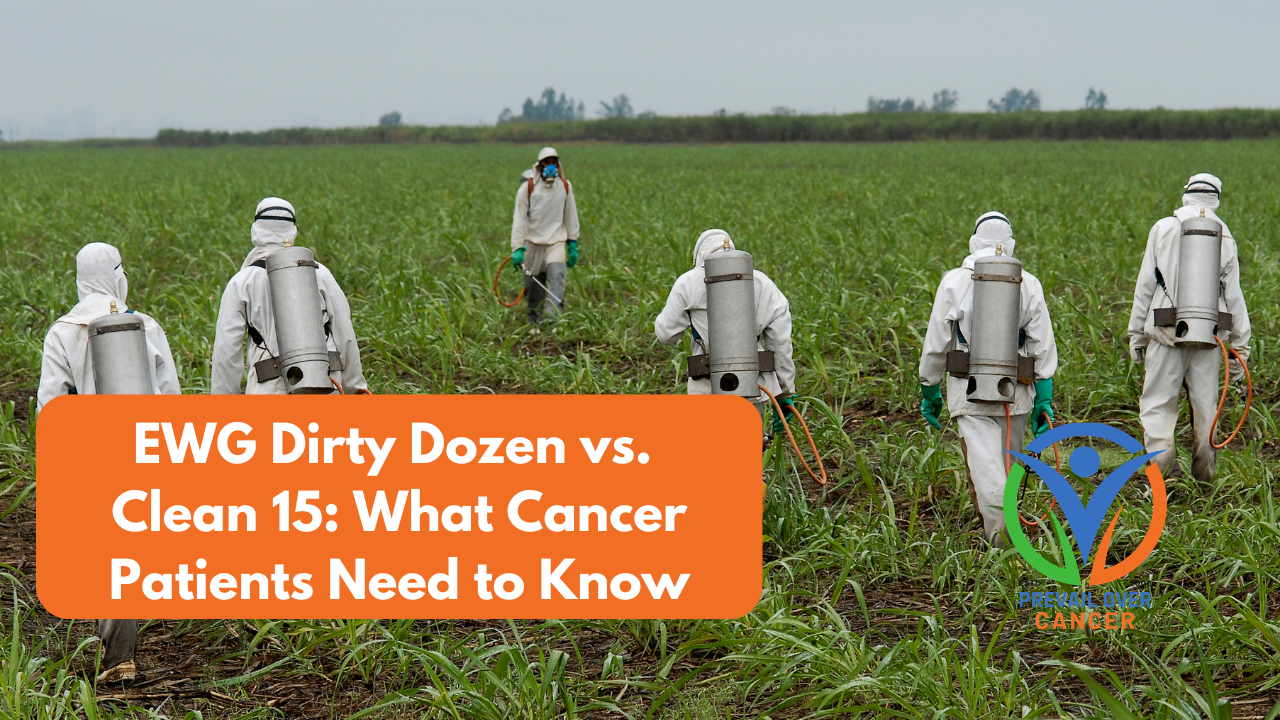
How to shop strategically, reduce pesticide exposure, and wash your produce the right way — including the evidence-based baking soda method.
If you or someone you love is navigating a cancer diagnosis, the food choices you make every single day matter. Not just in terms of nutrition, but in terms of what may be riding along on your produce when it arrives at your plate.
Every year, the Environmental Working Group (EWG) analyzes data from the U.S. Department of Agriculture (USDA) and the Food and Drug Administration (FDA) to identify which fruits and vegetables carry the highest — and lowest — levels of pesticide residues. Their findings are published as two iconic lists: the Dirty Dozen™ and the Clean 15™.
At Prevail Over Cancer, we follow the principle: Prevail. Assess. Don't Guess.™ That means making informed decisions grounded in real data — including the data on what's sprayed on your food.
This guide will walk you through both lists, explain why pesticide exposure matters in the context of cancer, and give you a simple, effective method for washing your produce using two pantry staples you likely already have: baking soda and bath (water).
Why Pesticides Matter for Cancer Patients
Pesticides are designed to kill — insects, fungi, weeds, and other organisms. But many of these compounds are not selectively harmful to pests alone. A growing body of research links chronic pesticide exposure to a range of serious health effects, including:
- Endocrine (hormone) disruption
- Immune system suppression
- Oxidative stress and DNA damage
- Gut microbiome disruption
- Increased cancer risk — particularly for certain pesticide classes
For cancer patients, these concerns are amplified. Many cancer treatments already tax the liver, immune system, and gut. Adding a daily chemical burden from pesticide-laden produce — especially when the body is already compromised — is simply unnecessary risk.
The good news: strategic shopping and proper washing can dramatically reduce your exposure. That starts with knowing which produce items carry the greatest risk.
What Is the EWG and How Are These Lists Determined?
The Environmental Working Group is a nonprofit, non-partisan organization dedicated to protecting human health and the environment. Since 1995, they have published an annual Shopper's Guide to Pesticides in Produce based on USDA and FDA testing data.
The USDA samples tens of thousands of produce items each year — testing them after they have been washed and/or peeled as consumers typically prepare them. This is critical: the detected pesticide residues are those that remain after standard preparation. In other words, the levels found on the Dirty Dozen are not worst-case pre-washing scenarios — they are what's left after normal washing.
|
Key Insight USDA testing is conducted after standard washing and peeling — meaning the Dirty Dozen list reflects residues that survive routine food preparation. This is why strategic washing methods matter. |
Items on the Dirty Dozen rank highest in the number of different pesticides detected, the frequency of detection, the total pesticide load, and the concentration of the most toxic pesticides.
Items on the Clean 15 rank lowest across these same measures and are considered lower-risk choices when organic options are unavailable or cost-prohibitive.
The EWG Dirty Dozen™ — Buy Organic When Possible
These twelve items consistently test with the highest pesticide burdens. For cancer patients and those in prevention mode, these should be purchased organic whenever possible — or washed with the protocol described later in this article.
|
🚨 THE DIRTY DOZEN™ |
🚨 THE DIRTY DOZEN™ (cont.) |
|
🍓 Strawberries |
🍇 Grapes |
|
🥬 Spinach |
🌶️ Bell & Hot Peppers |
|
🥬 Kale, Collard & Mustard Greens |
🫐 Blueberries |
|
🍑 Peaches |
🥒 Cucumbers |
|
🍐 Pears |
🍒 Cherries |
|
🍎 Apples |
🫘 Green Beans |
|
Spotlight: Strawberries — #1 for the Eighth Consecutive Year Strawberries have held the top position on the Dirty Dozen list for nearly a decade. USDA testing has detected over 90 different pesticide residues on strawberries — more than any other produce item tested. Many of the pesticides found include fungicides, insecticides, and fumigants, some of which are linked to hormone disruption and neurotoxicity. |
A note on spinach, kale, and leafy greens: these crops are also notable for their ability to detect DCPA (also known as Dacthal), a pesticide that the EPA has flagged as a possible human carcinogen. Leafy greens are nutritional powerhouses in the anticancer diet — but they should be purchased organic or washed with care.
The EWG Clean 15™ — Lower Pesticide Risk
These fifteen items consistently test with the lowest pesticide residues. Many have thick skins or outer layers that provide a natural barrier — such as avocados, pineapple, and onions. Conventionally grown versions of these items are generally considered lower-risk options.
|
✅ THE CLEAN 15™ |
✅ THE CLEAN 15™ (cont.) |
|
🥑 Avocados |
🥝 Kiwi |
|
🌽 Sweet Corn |
🍆 Cabbage |
|
🍍 Pineapple |
🍄 Mushrooms |
|
🧅 Onions |
🥭 Mango |
|
🥭 Papaya |
🍠 Sweet Potatoes |
|
🫛 Sweet Peas (Frozen) |
🍉 Watermelon |
|
🍈 Asparagus |
🥦 Carrots |
|
🍯 Honeydew Melon |
|
|
Avocados: A Cancer-Fighting Standout on the Clean 15 Avocados are not only the cleanest item on the Clean 15 list — they are also one of the most valuable foods in an anticancer diet. Rich in healthy monounsaturated fats, glutathione, and carotenoids, avocados support cellular detoxification, reduce inflammation, and enhance the absorption of fat-soluble phytonutrients like lycopene and beta-carotene. |
Important caveat: "Clean" does not mean pesticide-free. All conventionally grown produce has some level of pesticide exposure. The Clean 15 simply represents items where your exposure risk is significantly lower — making them a more practical choice when budget or availability limits access to organic produce.
How to Wash Fruits & Vegetables: The Baking Soda Method
Whether you shop organic or conventional, washing your produce is a non-negotiable step in an anticancer kitchen. But not all washing methods are created equal.
Research published in the Journal of Agricultural and Food Chemistry found that washing produce in a baking soda solution was significantly more effective at removing pesticide residues than washing in plain tap water or commercial bleach. In one study, a 1% baking soda solution removed nearly all detectable surface pesticide residues from apples within 12–15 minutes of soaking.
This makes the baking soda wash an accessible, affordable, and evidence-based tool for any household — especially for cancer patients purchasing conventionally grown produce from the Dirty Dozen.
Why Baking Soda Works
Baking soda (sodium bicarbonate) is alkaline. Most pesticides used on produce are acid-stable, meaning they adhere to the produce surface under normal (slightly acidic) conditions. The alkaline environment created by baking soda triggers a chemical reaction that degrades many surface-level pesticide residues — including organophosphates, thiabendazole, and phosmet — making them easier to rinse away.
It does not remove systemic pesticides (those absorbed into the flesh of the fruit or vegetable through the root system), but it is highly effective against surface residues, which account for the majority of detectable contamination on most produce items.
The Baking Soda Produce Wash: Step-by-Step
|
What You Need • A clean sink or large bowl • Cold or cool water (not hot — heat can drive residues deeper into produce) • 1 teaspoon of baking soda per 2 cups of water (approximately a 1% solution) • A soft produce brush for firm-skinned items • Clean paper towels or a clean drying rack |
- Fill your sink or a large bowl with cold water.
- Add baking soda: use approximately 1 teaspoon per 2 cups of water. Stir gently to dissolve.
- Submerge the produce completely. Make sure all surfaces are in contact with the solution.
- Soak for 12–15 minutes. This is the key — brief rinses are far less effective. The soak time allows the alkaline solution to degrade surface residues.
- Scrub firm-skinned produce (apples, cucumbers, peppers, grapes) gently with a soft brush during the soak or after.
- Rinse thoroughly under cold running water for at least 30 seconds per item. This step removes loosened residues and the baking soda itself.
- Dry with a clean paper towel or air-dry on a clean rack before storing or eating.
Produce-Specific Washing Tips
|
Produce Type |
Washing Tip |
|
Strawberries & Berries |
Do not wash until ready to eat. Soak in baking soda solution for 12–15 min, then rinse gently. Avoid soaking too long as berries can absorb water. |
|
Leafy Greens (Spinach, Kale) |
Separate leaves and submerge fully. Swish in baking soda water, let soak 12 min, then rinse each leaf individually under running water. |
|
Apples, Pears & Peaches |
Use a soft brush during the baking soda soak to scrub waxy coatings and surface residues. Rinse thoroughly. |
|
Grapes & Cherries |
Soak the full cluster/bunch in baking soda solution. Rinse by placing in a colander under running water for 60+ seconds. |
|
Cucumbers & Peppers |
Scrub with a produce brush during or after the baking soda soak. These often have a wax coating — scrubbing helps lift it. |
|
Blueberries |
Place in a fine mesh strainer, submerge in baking soda solution for 12 min, then rinse gently under cool running water. |
|
Green Beans |
Soak in baking soda solution, rinse thoroughly. Trim ends after washing, not before, to prevent the cut end from absorbing residues. |
A Practical Anticancer Shopping Strategy
Here is how to apply this information without overwhelming your budget or your weekly routine:
|
Priority Organic: Always Buy Organic Strawberries, spinach, kale/collard greens, peaches, pears, apples, grapes, bell and hot peppers, blueberries, cucumbers, cherries, and green beans. |
|
Flexible Conventional: Acceptable Without Organic Avocados, sweet corn, pineapple, onions, papaya, sweet peas (frozen), asparagus, honeydew, kiwi, cabbage, mushrooms, mango, sweet potatoes, watermelon, and carrots. |
|
Always Wash Everything Even organic and Clean 15 produce can carry soil, bacteria, and residual compounds from handling and transport. The baking soda method is recommended for all produce from the Dirty Dozen. For Clean 15 items, a thorough cold water rinse of 30–60 seconds under running water is appropriate. |
Integrating Clean Produce Into the Prevail Protocol™
At Prevail Over Cancer, we organize our integrative strategies around five core pillars: Assess, Nourish, Fortify, Activate, and Integrate. Understanding the EWG lists and applying the baking soda wash protocol lives squarely within the Nourish pillar.
The Nourish pillar is not just about what you eat — it is about the quality and purity of what you eat. A diet rich in organic or carefully washed vegetables and fruits supports every other aspect of the Prevail Protocol™:
- It reduces the toxic burden on your liver — critical for patients on chemotherapy, targeted therapy, or supplement protocols.
- It supports a healthy gut microbiome — foundational to immune function and treatment tolerance.
- It maximizes the bioavailability of phytonutrients — the plant compounds that actively support anticancer signaling pathways.
- It reduces systemic inflammation — a key driver of cancer progression and treatment resistance.
Clean produce is not a luxury. It is a foundational anticancer tactic.
The Bottom Line
The EWG Dirty Dozen and Clean 15 are practical, evidence-based tools for reducing pesticide exposure — one of the modifiable environmental risk factors relevant to cancer. You do not need to buy everything organic to reduce your risk. You need a strategy.
Know the Dirty Dozen. Prioritize organic for those items. Use the baking soda wash for conventional Dirty Dozen produce when organic is unavailable. And remember: the goal is progress, not perfection.
|
Prevail. Assess. Don't Guess.™ Every meal is an opportunity to either support or undermine your body's ability to heal. Choose support — one plate at a time. |
References
- Environmental Working Group. EWG's 2024 Shopper's Guide to Pesticides in Produce. ewg.org/foodnews
- Yang T, et al. Effectiveness of Commercial and Homemade Washing Agents in Removing Pesticide Residues on and in Apples. J Agric Food Chem. 2017;65(44):9744-9752. PMID: 29067814
- Benbrook CM. Trends in glyphosate herbicide use in the United States and globally. Environ Sci Eur. 2016;28(1):3. PMID: 27752438
- Bassil KL, et al. Cancer health effects of pesticides: systematic review. Can Fam Physician. 2007;53(10):1704-1711. PMID: 17934034
- USDA Pesticide Data Program Annual Summary. ams.usda.gov/datasets/pdp
|
Ready to Go Deeper? Explore the full Prevail Protocol™ and our integrative oncology education resources. Learning Center: prevailovercancer.com/learning-center POC Academy: prevailovercancer.com/academy Cancer Coaching: prevailovercancer.com/coaching Together — We Prevail Over Cancer!™ 👊 This content is for educational purposes only and is not intended as medical advice. Always consult your healthcare team. |
Author

Keith Bishop
Clinical Nutritionist, Cancer Coach, Retired Pharmacist, Author
Keith Bishop founded Prevail Over Cancer and is a passionate advocate for cancer awareness and research. With a background in pharmacy and clinical nutrition I’m dedicated to providing insightful and empowering information to help clients, survivors, and caregivers navigate their journey. From personal experiences and a commitment to holistic health, Keith aims to inspire and support the cancer community through comprehensive and accessible content.
Join over 8,000 subscribers!
Get access to Keith's Prevail Over Cancer Newsletter with news, blogs, and updates!
Recent Posts
Blog Post Topics
All Categories- microbiome modulation in oncology
25 hydroxyvitamin d cancer prevention
active hexose correlated compound
akkermansia and chemotherapy synergy
akkermansia and gastric cancer
akkermansia and radiation therapy
akkermansia muciniphila and cancer