
The EWG Dirty Dozen & Clean 15: What Every Cancer Patient Needs to Know About Pesticides in Produce
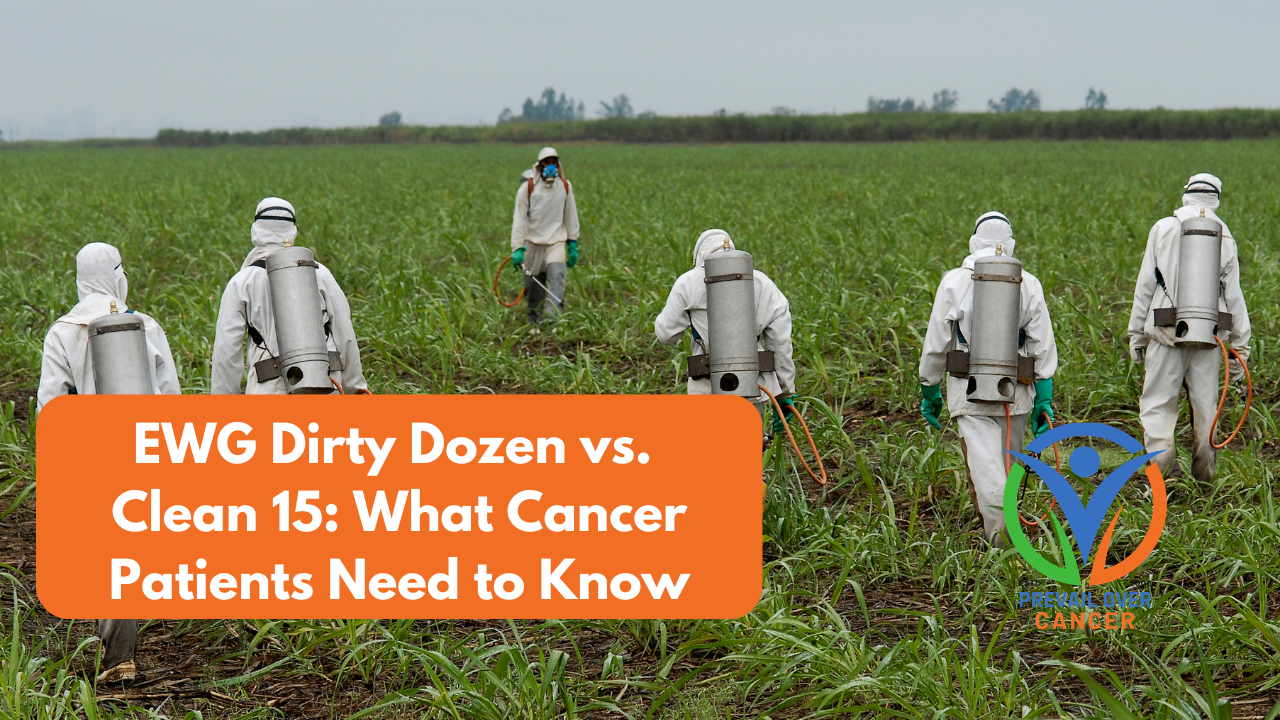
How to shop strategically, reduce pesticide exposure, and wash your produce the right way — including the evidence-based baking soda method.
If you or someone you love is navigating a cancer diagnosis, the food choices you make every single day matter. Not just in terms of nutrition, but in terms of what may be riding along on your produce when it arrives at your plate.
Every year, the Environmental Working Group (EWG) analyzes data from the U.S. Department of Agriculture (USDA) and the Food and Drug Administration (FDA) to identify which fruits and vegetables carry the highest — and lowest — levels of pesticide residues. Their findings are published as two iconic lists: the Dirty Dozen™ and the Clean 15™.
At Prevail Over Cancer, we follow the principle: Prevail. Assess. Don't Guess.™ That means making informed decisions grounded in real data — including the data on what's sprayed on your food.
This guide will walk you through both lists, explain why pesticide exposure matters in t...
Top Lab Tests That Reveal Hidden Cancer Risks: A Functional Medicine Guide to Terrain-Based Healing
From Glucose and Ketones to Genetics and Toxins—Why Testing Beats Guessing in Cancer Prevention and Metabolic Therapy
Written and researched by Keith Bishop, Clinical Nutritionist, Cancer Coach, Retired Pharmacist, and founder of Prevail Over Cancer
What if the most dangerous cancer risks aren’t visible on a scan or felt in the body—but quietly building in your blood, urine, and genes?
In cancer care, guessing is gambling. Symptoms can be vague, and even “clean” imaging doesn’t mean the terrain is safe. That’s why lab testing isn’t just helpful—it’s essential. From glucose and ketones to hormone metabolites and heavy metals, these biomarkers reveal the biochemical landscape cancer cells exploit—and the ones we can disrupt.
Whether you're navigating active treatment, remission, or prevention, here’s a breakdown of the tests I recommend most often for clients—and why they matter.
The following tests are part of what I help clients with and are not a comprehensive list. It is essenti...
Author

Keith Bishop
Clinical Nutritionist, Cancer Coach, Retired Pharmacist, Author
Keith Bishop founded Prevail Over Cancer and is a passionate advocate for cancer awareness and research. With a background in pharmacy and clinical nutrition I’m dedicated to providing insightful and empowering information to help clients, survivors, and caregivers navigate their journey. From personal experiences and a commitment to holistic health, Keith aims to inspire and support the cancer community through comprehensive and accessible content.
Join over 8,000 subscribers!
Get access to Keith's Prevail Over Cancer Newsletter with news, blogs, and updates!
Recent Posts
Blog Post Topics
All Categories- microbiome modulation in oncology
25 hydroxyvitamin d cancer prevention
active hexose correlated compound
akkermansia and chemotherapy synergy
akkermansia and gastric cancer
akkermansia and radiation therapy
akkermansia muciniphila and cancer